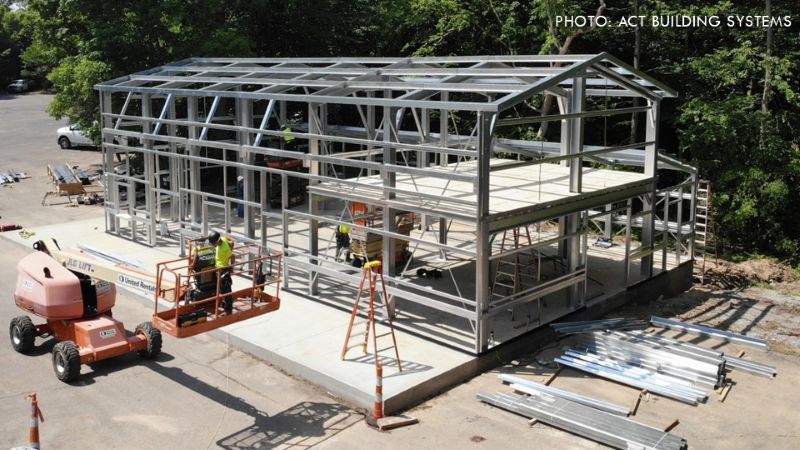
Cold-formed steel (CFS) is rapidly transforming the construction landscape, offering a blend of strength, efficiency, and versatility that traditional building materials struggle to match. New projects, like Jacob’s Well in Greenville, Indiana, demonstrate the innovative potential of CFS, showcasing design features that were once thought unattainable without custom engineering. This shift is crucial for architects, engineers, and builders looking to push the boundaries of modern construction.
What Happened
The construction industry is witnessing a paradigm shift as cold-formed steel emerges as a preferred material for ambitious building projects. Jacob’s Well, a project in Greenville, Indiana, serves as a prime example of this trend. Built using ACT Dimensions software, the structure highlights the advanced design capabilities of CFS without the need for custom engineering. Initially perceived as complex, the material is now recognized for its precision and strength, which allow for larger and more complex architectural designs. Cody Rodden, president of Building Research Systems Inc., notes the initial skepticism around CFS, likening its assembly to a "Tinker Toy set." However, as the industry becomes more familiar with its capabilities, CFS is gaining traction for projects that demand both innovation and durability.
Cold-formed steel buildings have been around for decades, but only now is the industry catching up to the material's full potential. Builders have found CFS to be particularly advantageous for structures like barndominiums and ranch shops, where lightweight and resilient materials are essential. These buildings can withstand high winds and heavy snow loads, outperforming traditional stick-frame construction in both durability and maintenance.
What This Means for Your Business
For businesses in the architecture, engineering, and construction sectors, the rise of cold-formed steel presents significant opportunities. CFS not only meets all applicable building code requirements but also reduces construction costs and timelines. Unlike red iron structures, which require extensive manpower and equipment, CFS buildings need fewer resources, resulting in lower overall costs. For instance, a CFS project in Billings, Montana, required only a standard monolithic pour for its foundation, eliminating the need for cranes and heavy equipment. This efficiency translates into competitive pricing and faster project completion, providing a considerable edge in the market.
The adoption of CFS also aligns with federal compliance standards, including AISI S100, AISI S240, ICC-ES, and IBC structural provisions. For regions like Miami-Dade, where stringent building regulations are in place, CFS systems can comply when manufacturers obtain the necessary Notice of Acceptance. This opens up new avenues for federal contracts and government-funded projects seeking sustainable and cost-effective building solutions.
What US Operators Should Watch
Industry professionals should closely monitor the evolving standards and regulations surrounding cold-formed steel construction. Staying informed about compliance requirements, such as those mandated by the American Iron and Steel Institute (AISI) and the International Code Council (ICC), will be crucial for securing government contracts. Additionally, businesses should be aware of opportunities to leverage CFS in federally funded projects and infrastructure initiatives, as these can provide lucrative avenues for growth.
As the demand for innovative and sustainable building solutions increases, cold-formed steel is poised to become a cornerstone of modern construction. By embracing this material, US operators can enhance their competitive positioning, optimize costs, and deliver projects that meet the highest standards of durability and design.
Source: https://www.metalconstructionnews.com/articles/cold-formed-steel-buildings-come-of-age/. Read the original story ->
Is your firm ready for what’s next?
VisioneerIT helps AECM and government contractors modernize operations, achieve compliance, and implement AI.
Explore VisioneerIT Solutions →