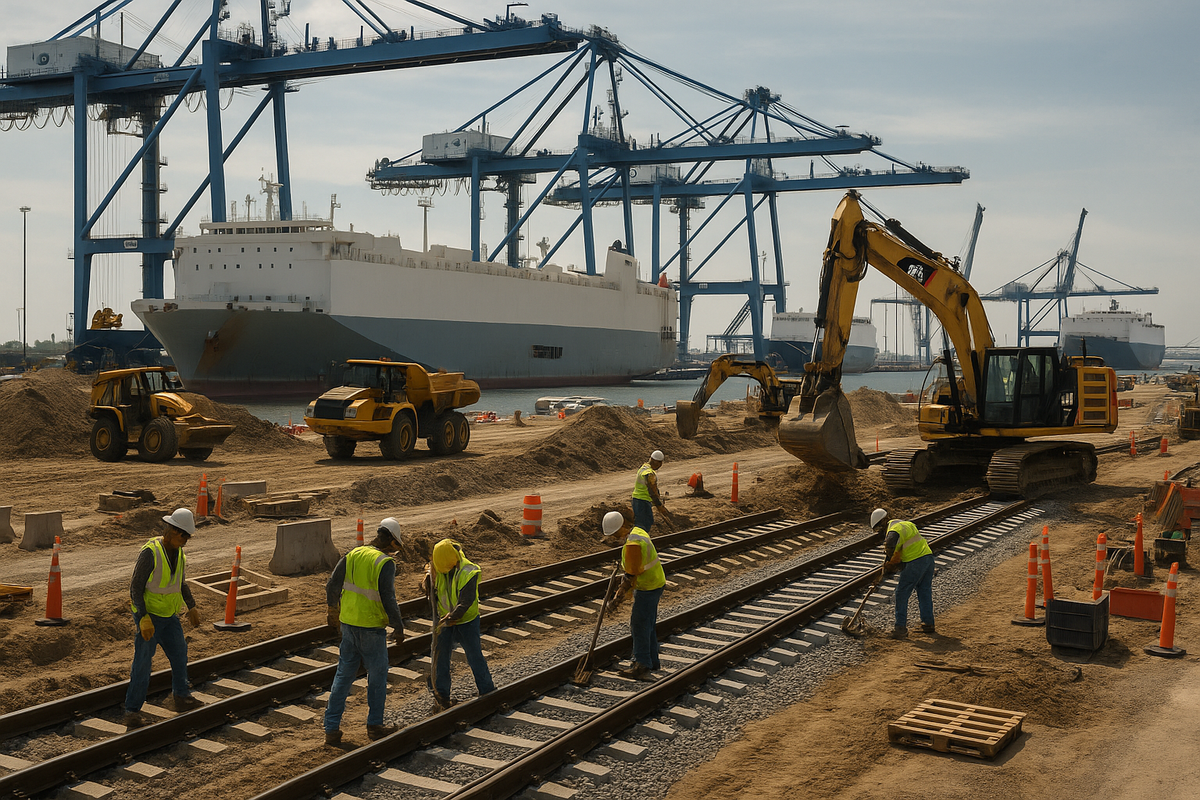
The Port of Charleston is set to significantly expand its capacity to handle automotive cargo, a move aimed at enhancing its appeal to automakers reliant on just-in-time supply chains. This expansion, which includes improvements to rail infrastructure and vessel parking areas, is crucial as the port seeks to solidify its position as a key player in automotive logistics.
What Happened
The South Carolina Ports Authority has announced plans to upgrade the Port of Charleston's facilities to better accommodate the growing demands of the automotive industry. This initiative will focus on enhancing rail infrastructure and expanding vessel parking areas, which are vital for automakers that require efficient and timely delivery of parts. The port's strategic location and its existing capabilities make it an attractive hub for automotive manufacturers who depend on fast and reliable supply chains to maintain production schedules.
What This Means for Your Business
For businesses in the architecture, engineering, construction, and manufacturing (AECM) sectors, this development presents several implications. Firstly, companies involved in the construction and engineering of port facilities may find new opportunities in the planned infrastructure upgrades. Additionally, manufacturers, particularly those supplying the automotive industry, could benefit from improved logistics and shipping efficiencies, potentially reducing costs and increasing competitiveness. The expansion could also lead to increased contract opportunities for firms specializing in rail and maritime infrastructure.
From a compliance standpoint, companies should stay informed about potential changes in regulations and standards related to port operations and automotive logistics. Ensuring adherence to evolving compliance requirements, such as those related to cybersecurity in supply chains, will be crucial for maintaining eligibility for federal contracts and avoiding penalties.
What US Operators Should Watch
AECM professionals should keep an eye on the timelines for the port's expansion projects, as these will signal when new opportunities for contracts and procurement may arise. Additionally, monitoring federal and state funding allocations for infrastructure improvements could reveal further investment opportunities. Companies should also track any updates to compliance requirements, such as those related to the Cybersecurity Maturity Model Certification (CMMC), which could impact operations and contract eligibility in the defense
Is your firm ready for what’s next?
VisioneerIT helps AECM and government contractors modernize operations, achieve compliance, and implement AI.
Explore VisioneerIT Solutions →