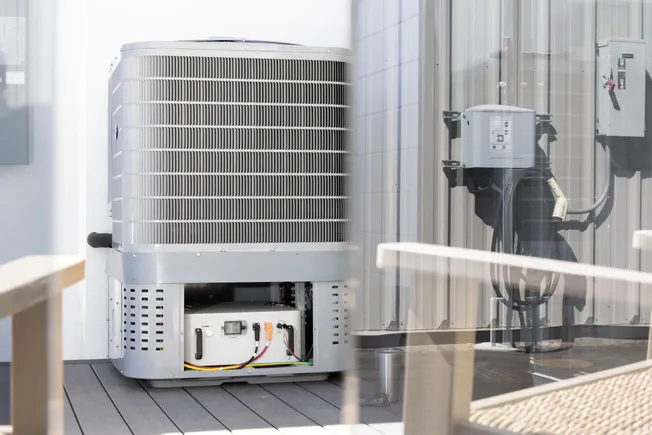
Battery energy storage system (BESS) failures have dropped by 98% from 2018 to 2025, according to the Electric Power Research Institute (EPRI). This dramatic decline underscores significant technological advancements and improved safety measures. For AECM professionals, understanding these developments is crucial as the landscape evolves.
What Happened
The recent EPRI analysis highlights a substantial reduction in global lithium-ion battery energy storage system failures, measured on a per-GWh basis. From 2018 to 2025, failure rates plummeted by 98%, with a notable 50% decrease between 2024 and 2025 alone. Stationary energy storage systems now exhibit annual failure rates ranging from 0.04% to 0.14%, closely aligning with the 0.1% annual failure rate of oil-filled electrical transformers. EPRI's report, "Risk Factors and Failure Statistics of Lithium-Ion BESS," attributes these improvements to advancements in technology and project execution.
Despite these gains, older systems, particularly those predating 2021, require careful attention. Safety reviews and potential retrofits are recommended to reduce failure risks. These older systems, constructed under less stringent codes, are more prone to incidents than newer installations. EPRI's report highlights that 93% of reviewed BESS safety incidents worldwide resulted in no injuries or fatalities, with no related injuries reported in the U.S. since April 2019.
What This Means for Your Business
For AECM industry leaders, the advancements in BESS reliability present both opportunities and challenges. The ongoing improvements offer a compelling case for investing in newer systems or upgrading older installations. The reduction in failure rates enhances ROI and can lower insurance premiums due to decreased risk.
Government contractors and compliance officers must remain vigilant about evolving safety standards such as NFPA 855, which governs energy storage systems. Ensuring older systems comply with these standards through retrofits can mitigate potential liabilities and enhance operational reliability.
For procurement directors, the shift in failure rates could influence purchasing decisions, emphasizing the importance of selecting systems with proven reliability. This trend also impacts competitive positioning, as companies with robust, compliant BESS infrastructure may gain an edge in bidding for government contracts.
What US Operators Should Watch
As the industry progresses, operators must monitor key regulatory updates and safety standards. NFPA 855 compliance remains critical for minimizing risks associated with older BESS installations. Regular risk assessments and corrective measures should be prioritized for facilities commissioned before 2021, which account for just 3% of global energy storage capacity.
Additionally, operators should keep an eye on potential federal funding opportunities for retrofitting or upgrading existing BESS infrastructure to align with current safety standards and technological advancements.
Partner Insight · VisioneerIT
Understanding the advancements in battery energy storage systems is essential for technology companies aiming to secure government contracts. VisioneerIT can assist in navigating federal compliance standards to enhance your competitive positioning in the market.
Explore VisioneerIT Cybersecurity →
Is your firm ready for what’s next?
VisioneerIT helps AECM and government contractors modernize operations, achieve compliance, and implement AI.
Explore VisioneerIT Solutions →