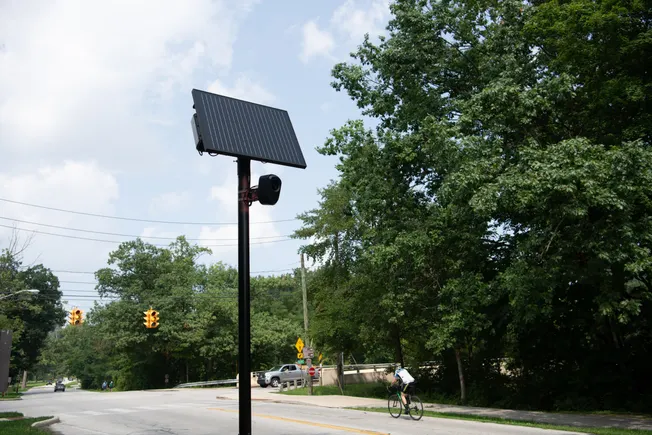
Municipalities across the United States are increasingly turning to automated license plate readers (ALPRs), like those offered by Flock Safety, as a tool for enhancing public safety. However, the adoption of this technology requires careful consideration of privacy concerns, contract negotiations, and public involvement.
What Happened
Automated license plate readers are becoming a staple in law enforcement’s toolkit, with companies such as Flock Safety providing systems that can scan thousands of plates per hour. These devices capture a wealth of information, including vehicle make, model, and specific characteristics, which can then be integrated with other surveillance technologies. As of August 2026, Flock Safety cameras were prominently deployed in areas like Rocky River, Ohio.
Experts like Kimberly Przeszlowski from Quinnipiac University highlight that ALPRs offer more than just plate reading; they create comprehensive vehicle profiles, akin to a 'vehicle fingerprint.' Johnny Nhan of Texas Christian University warns of a potential slippery slope as these technologies become intertwined with AI and real-time crime centers.
Despite the technical capabilities, concerns are being raised about the influence of vendor marketing strategies. According to Steven Keener of Christopher Newport University, law enforcement agencies often find themselves dependent on these technologies after initial free trials, leading to complex contract negotiations. There is also a notable lack of public consultation before deployment, as highlighted by cases where residents are informed only after systems are operational.
What This Means for Your Business
For businesses operating in the AECM sector and those involved in government contracting, the rise of ALPR technology presents both opportunities and challenges. Companies involved in infrastructure or urban development should consider the implications of integrating such technologies into their projects. The potential for ALPR systems to become a standard component of smart city infrastructure could lead to increased demand for installation and maintenance services.
However, the increasing scrutiny on privacy and data security means that businesses must be prepared to address compliance with federal regulations such as the Cybersecurity Maturity Model Certification (CMMC) and the National Institute of Standards and Technology (NIST) guidelines. The integration of ALPRs with AI and other surveillance tools also necessitates a robust understanding of zero trust architectures to secure data effectively.
What US Operators Should Watch
Business leaders and contractors should closely monitor developments in public policy and regulatory changes related to ALPR usage. As cities like Harrisonburg, Virginia, demonstrate models of successful public involvement in technology adoption, further regulation and public consultation requirements may emerge. Companies should be prepared for potential shifts in procurement processes and ensure that their offerings align with new compliance standards.
Additionally, staying informed about vendor practices and contract structures is crucial. Understanding the implications of initial free trials and subsequent contract dependencies can help businesses negotiate more favorable terms and avoid unexpected costs.
Is your firm ready for what’s next?
VisioneerIT helps AECM and government contractors modernize operations, achieve compliance, and implement AI.
Explore VisioneerIT Solutions →