Architecture firm leaders are expressing increased pessimism about billings in the fourth quarter of 2026, according to the latest data from the American Institute of Architects (AIA). This downward shift in sentiment could have significant implications for the construction sector, affecting project timelines and resource allocation.
What Happened
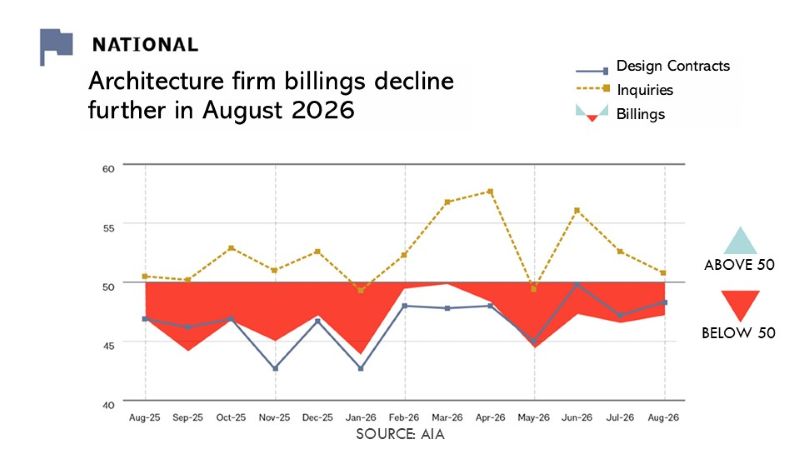
The AIA/Deltek Architecture Billings Index (ABI), a crucial economic indicator for nonresidential construction activity, reported a score of 47.2 for August 2026. This marks a slight improvement from July’s 46.6 but remains below the growth threshold of 50. The ABI has consistently indicated contraction in billings and design contracts over the past year, while project inquiries have managed to stay above the growth line. Despite a modest uptick in employment with 700 new architectural services positions added in July, the overall business conditions at architecture firms remain weak. Sentiment among firm leaders reflects this uncertainty; only 25% expect an increase in billings in Q4, a drop from 30% in Q3.
Regional and specialization disparities also emerged. Firms in the Midwest experienced modest growth for the first time in a year, while those in the Northeast saw a significant decline, hitting the lowest levels since 2020. Firms with a commercial or industrial focus reported slight improvements, contrasting with stagnant conditions for those specializing in institutional and multifamily residential projects.
What This Means for Your Business
For construction and engineering firms, the implications of a continued decline in architecture firm billings are profound. A contracting market can lead to fewer projects, impacting everyone from contractors to suppliers. Firms should prepare for potential delays in project initiation and consider diversifying their portfolios to buffer against regional downturns. The slight increase in architectural employment suggests some optimism, but businesses should remain cautious about overextending resources.
Additionally, firms must remain vigilant regarding compliance with federal regulations, including the Cybersecurity Maturity Model Certification (CMMC) and NIST standards, as projects become more competitive and securing government contracts demands heightened diligence.
What US Operators Should Watch
Stakeholders should closely monitor the ABI scores in the coming months, especially as Q4 approaches. Watching for policy changes or federal stimulus packages targeting the construction sector could also offer opportunities for new projects. Keeping an eye on regional trends will be crucial, as will understanding how specialization impacts firm performance. Firms should also prepare for potential shifts in federal procurement strategies, which could open new doors or close existing ones.
Source: https://www.metalconstructionnews.com/news/increased-pessimism-among-architecture-firm-leaders-about-q4-2026-billings/ Read the original story ->
Is your firm ready for what’s next?
VisioneerIT helps AECM and government contractors modernize operations, achieve compliance, and implement AI.
Explore VisioneerIT Solutions →