By Anthony Capkun Posted August 7, 2026
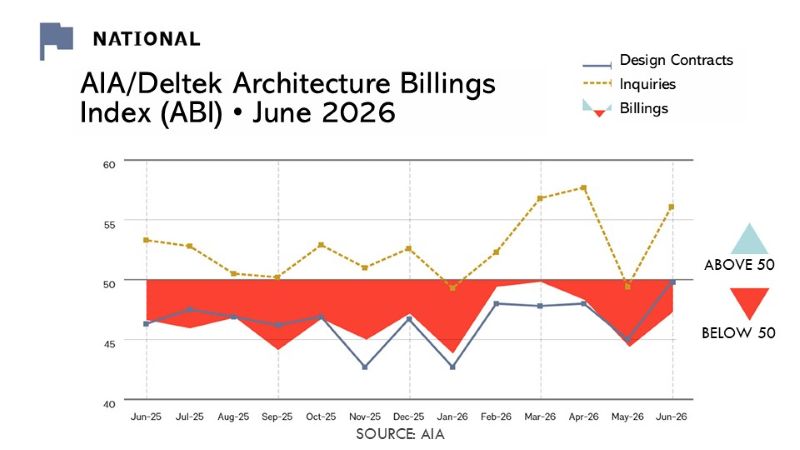
The AIA/Deltek Architecture Billings Index (ABI) revealed a slight improvement in June 2026, with the index rising to 47.3. However, this figure remains under the growth threshold of 50, indicating continued contraction in the architecture sector. This prolonged downturn, now stretching 41 months, poses significant challenges for firms across the United States as they navigate uncertain economic conditions.
What Happened
The Architecture Billings Index recorded a score of 47.3 in June 2026, up from May's record low since January but still below the critical growth mark of 50. This suggests that while fewer firms reported declining billings than in previous months, the majority still face contraction. The ABI is a key economic indicator, forecasting nonresidential construction activity 9 to 12 months ahead based on billings data from U.S. architecture firms. Despite a slight increase in project inquiries, design contracts remained flat, with backlogs decreasing from 6.6 months in the first quarter to 6.3 months in the second quarter. Smaller firms, particularly those with annual billings under $250,000, saw a sharper decline in backlogs, dropping from 4.9 months to 3.1 months.
Regionally, billings declined across the country except in the South, where they remained flat. The Midwest experienced further softening, continuing a trend from the previous quarter. Specializations in multifamily residential projects saw significant backlog reductions, from 6.2 months to 5.3 months. Employment in architectural services also fell, with a reduction of 300 jobs in May and a total decrease of 1,100 positions since February 2026.
What This Means for Your Business
For AECM professionals, understanding these dynamics is crucial for strategic planning and risk management. The prolonged downturn could impact contract opportunities and necessitate adjustments in staffing and project management to mitigate financial risks. With the ABI indicating potential challenges in nonresidential construction, firms may need to explore diversification or pivot strategies to maintain competitiveness. Compliance with evolving federal regulations such as those related to cybersecurity (CMMC, NIST) remains essential, particularly as firms seek to secure government contracts. Moreover, the downturn may influence bidding strategies, with a focus on optimizing ROI and cost management.
What US Operators Should Watch
Decision-makers should closely monitor upcoming federal funding opportunities and stay informed about changes in procurement windows and regulatory requirements, including CMMC deadlines. As the economic landscape evolves, staying ahead of bid opportunities and adapting to shifts in construction demand will be key to maintaining a competitive edge. The architecture sector's ongoing challenges underscore the importance of strategic foresight and adaptability in the face of prolonged economic uncertainty.
Is your firm ready for what’s next?
VisioneerIT helps AECM and government contractors modernize operations, achieve compliance, and implement AI.
Explore VisioneerIT Solutions →