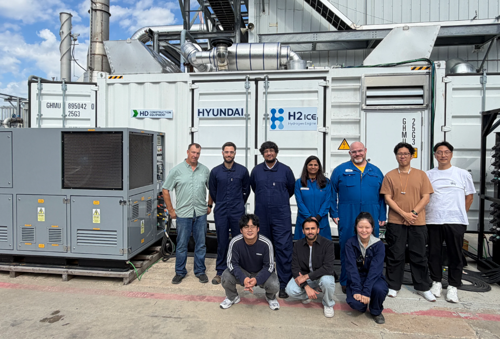
Amogy and HD Construction Equipment (HCE) have successfully tested an integrated ammonia-to-power generator system in Houston, marking a significant milestone in the development of low-emission industrial power solutions. This collaboration highlights a pivotal moment for the construction and energy sectors, as the use of ammonia-derived hydrogen fuel promises to revolutionize power generation with a focus on sustainability.
What Happened
Amogy and HCE conducted trials at Amogy’s ATHENA facility in Houston, integrating Amogy’s AMMDrive ammonia-cracking system with HCE’s HX22 hydrogen engine generator. The system converts liquid ammonia into a hydrogen-rich fuel stream, which is then used to generate electricity through the HX22 generator, rated at up to 600 kW. This test is described as the first U.S. operation of an HCE hydrogen engine running on ammonia-derived fuel. The successful trial serves as a validation of the system configuration planned for the first phase of a distributed power generation project in Pohang, South Korea, set to begin in the second quarter of 2027. The project aims for a 1 MW demonstration, with plans to scale up to 40 MW by 2029 and potentially support installations exceeding 100 MW.
What This Means for Your Business
For businesses in the AECM sector, this development could signal a transformative shift towards more sustainable energy sources, which may soon become a regulatory requirement. The integration of ammonia-to-power systems offers a pathway to lower emissions and enhanced energy efficiency, which could become crucial for companies seeking to comply with emerging environmental standards. Moreover, the scalability of the system presents opportunities for large-scale commercial applications, potentially reducing costs through economies of scale. Companies involved in procurement and compliance should monitor these advancements closely, as they may influence future bidding processes and project specifications.
What US Operators Should Watch
Stakeholders should track the progress of the Pohang project, especially the initial operations slated for 2027 and the subsequent scaling phases. These milestones will be critical in assessing the commercial viability and performance of ammonia-powered hydrogen engines. Additionally, businesses should keep abreast of any regulatory changes that might affect the adoption of such technologies, as well as potential government incentives for low-emission energy solutions. As the technology moves towards commercial deployment, opportunities for early adoption and competitive positioning will likely emerge.
Source: https://www.theconstructionindex.co.uk/news/view/amogy-and-hce-test-ammonia-power. Read the original story ->
Partner Insight · VisioneerIT
As the construction industry increasingly adopts sustainable energy solutions, the need for robust software systems to manage these innovations becomes critical. VisioneerIT specializes in modernizing legacy systems and developing scalable software that can support the integration of new technologies in construction projects.
Explore VisioneerIT Cybersecurity →
Is your firm ready for what’s next?
VisioneerIT helps AECM and government contractors modernize operations, achieve compliance, and implement AI.
Explore VisioneerIT Solutions →