The Alma Rosa Vineyard barn in California's Central Coast stands as a testament to the seamless blend of utility and aesthetic design, showcasing the potential of metal construction in agricultural settings. This innovative structure, designed by Clayton Korte, elegantly combines functionality with visual appeal, serving as a hub for vineyard operations while integrating harmoniously with the landscape.
What Happened
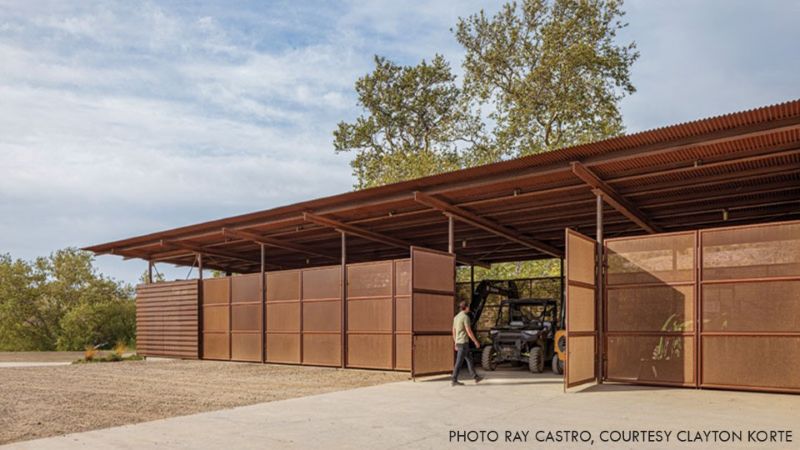
The Alma Rosa Vineyard barn, designed by Brian Korte, FAIA, and his team at Clayton Korte, utilizes a restrained palette of weathering steel, perforated corrugated metal, and cast-in-place concrete. The barn is strategically positioned to service vineyard blocks on both sides of the winery, providing expansive open-air covered space for storing and maintaining heavy farming equipment and tools. The choice of materials was driven by a need for durability, low maintenance, and fire resistance, essential in a wildfire-prone area.
Perforated metal cladding filters light and air while offering partial visual concealment, creating a structure that is both utilitarian and visually compelling. The weathering steel develops a protective patina over time, negating the need for periodic recoating and enhancing the barn's integration with its surroundings.
What This Means for Your Business
For AECM professionals, the Alma Rosa Vineyard barn exemplifies how thoughtful design and material selection can enhance both functionality and aesthetics in agricultural structures. The use of weathering steel not only reduces maintenance costs but also increases resilience against environmental challenges such as wildfires. This approach could inform future projects aiming for sustainability and long-term cost efficiency.
The barn's design also includes provisions for future adaptability, with the roof engineered to support a photovoltaic array that will eventually help offset the winery's energy demands. This forward-thinking aspect highlights the importance of designing structures that can evolve with technological advancements, offering potential ROI benefits through energy savings and sustainability.
What US Operators Should Watch
Operators in the AECM sector should monitor developments in material technology, particularly the use of weathering steel and other innovative materials that offer durability and environmental resilience. Additionally, keeping abreast of trends in sustainable design and energy-efficient construction will be crucial as federal and state regulations increasingly prioritize these aspects.
The Alma Rosa Vineyard barn serves as a case study for integrating aesthetic value with practical utility, setting a precedent for future projects in similar settings. As the industry moves towards more sustainable practices, understanding and implementing these design principles will be key to maintaining competitive positioning.
Source: https://www.metalconstructionnews.com/main-slider/finding-beauty-in-utility-perforated-metal-and-weathering-steel-define-the-alma-rosa-vineyard-barn/. Read the original story ->
Is your firm ready for what’s next?
VisioneerIT helps AECM and government contractors modernize operations, achieve compliance, and implement AI.
Explore VisioneerIT Solutions →