Carollo Engineers, in collaboration with several partners, has released a pioneering guidebook on artificial intelligence (AI) and machine learning (ML) applications in potable reuse systems. This guide is significant for water utilities focused on leveraging advanced technologies to enhance operational efficiency and improve water treatment processes.
What Happened
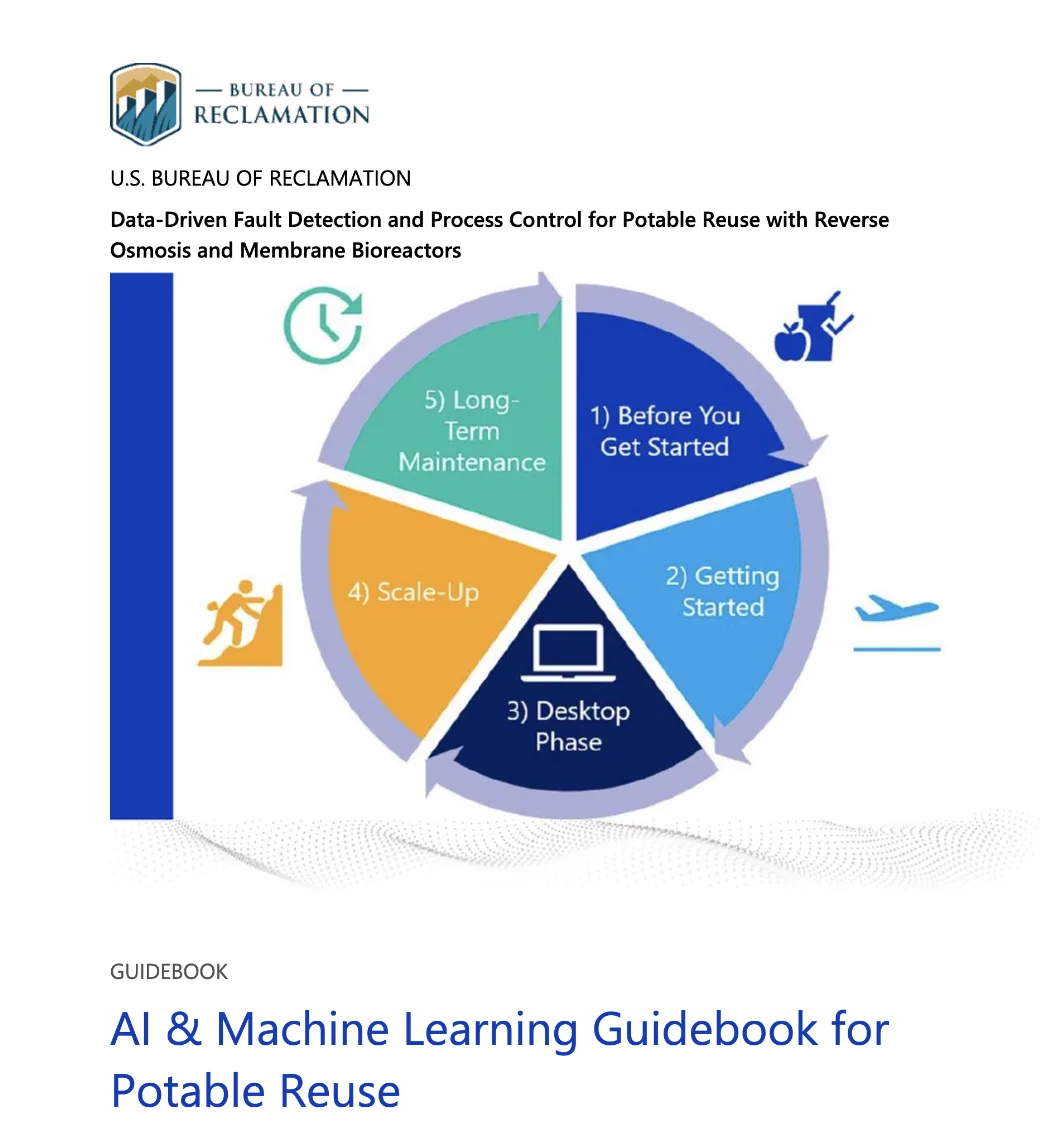
The U.S. Bureau of Reclamation funded a research project titled "Data-Driven Fault Detection and Process Control for Potable Reuse with Reverse Osmosis and Membrane Bioreactors," which culminated in the publication of a comprehensive AI & Machine Learning Guidebook for Potable Reuse. This guidebook is available for free download and offers utilities a roadmap for implementing AI and ML technologies across various water treatment applications. The guidebook is a collaborative effort involving Carollo Engineers, Yokogawa, the National Water Research Institute (NWRI), and Baylor University.
The guidebook covers the entire lifecycle of AI and ML implementation, including foundational concepts, data management, model development, pilot testing, cybersecurity, workforce readiness, and long-term maintenance. Real-world applications discussed in the guide include process optimization, predictive maintenance, water quality forecasting, digital twins, and fault detection. It provides a phased approach to implementation, allowing utilities to build confidence, validate performance, and minimize risk.
What This Means for Your Business
For businesses involved in water treatment and utility management, the guidebook presents a strategic opportunity to enhance operational efficiency and decision-making through AI and ML technologies. The guidebook’s emphasis on strong data management practices, operator engagement, cybersecurity planning, and organizational readiness highlights the multifaceted requirements for successful AI and ML adoption.
Utilities can leverage these technologies to make better use of operational data, optimize processes, and improve water quality outcomes. By adopting the guidebook's recommendations, businesses can position themselves competitively, streamline operations, and potentially reduce costs associated with water treatment processes.
What US Operators Should Watch
Operators should monitor the integration of AI and ML technologies in water treatment systems, with attention to pilot testing phases and performance validation. As utilities begin to implement these technologies, the emphasis on cybersecurity and data management will be critical. Organizations should prepare for potential regulatory changes that may arise as AI and ML technologies become more prevalent in water treatment processes.
For those interested, the guidebook is accessible for download, offering valuable insights and practical steps for implementing AI and ML in potable reuse and related applications.
Source: https://zweiglist.com/carollo-engineers-and-partners-release-artificial-intelligence-and-machine-learning-guidebook-for-potable-reuse/. Read the original story ->
Is your firm ready for what’s next?
VisioneerIT helps AECM and government contractors modernize operations, achieve compliance, and implement AI.
Explore VisioneerIT Solutions →