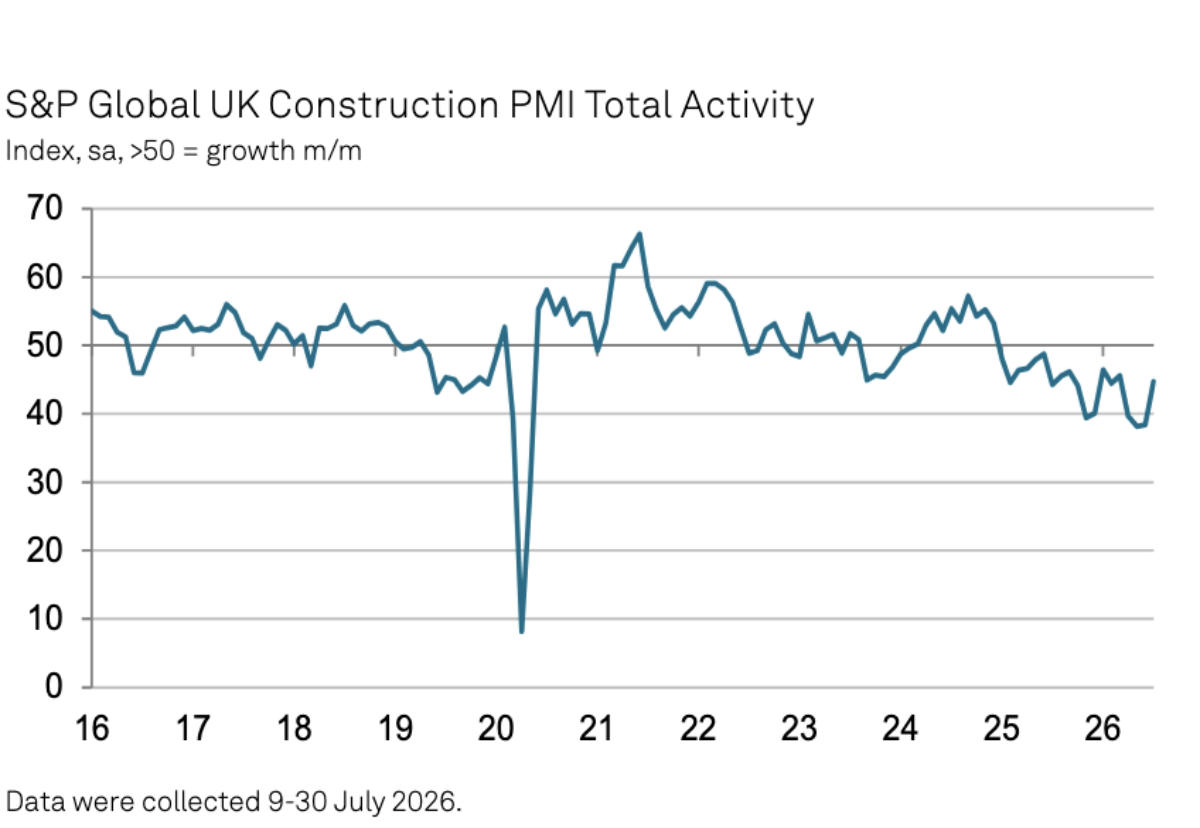
The UK construction industry, a critical indicator of economic health, is showing early signs of stabilization after a challenging second quarter in 2026. The S&P Global UK Construction Purchasing Managers’ Index (PMI) rose to 44.7 in July from June’s low of 38.4. While still below the crucial 50 mark indicating growth, the data suggests a slowdown in the rate of contraction across the sector.
What Happened
The latest figures from the S&P Global UK Construction PMI reveal a complex but cautiously optimistic picture for the UK construction industry. The PMI, which is a key economic indicator, climbed to 44.7 in July, up from 38.4 in June. This improvement, though still below the growth threshold of 50, indicates that the sector's rate of contraction has slowed significantly. Commercial construction showed particular resilience, with its index at 46.8, outperforming other sub-sectors. Meanwhile, civil engineering continued to struggle, with an index of 38.3, marking the steepest decline. House building, however, saw its slowest decrease since October 2025, with an index of 41.8.
Business activity expectations have also improved, with 38% of firms anticipating expansion in the coming year, marking the highest optimism level since February. This positive outlook is supported by a noted revival in tender opportunities for commercial development, residential projects, and transport infrastructure work. Despite ongoing challenges like fuel surcharges and elevated raw material costs driven by geopolitical tensions in the Middle East, the overall rate of cost inflation was the lowest in five months.
What This Means for Your Business
For US-based AECM professionals and government contractors, these developments in the UK construction sector could signal upcoming opportunities. The revival in tender opportunities, especially in commercial and infrastructure projects, may open doors for American firms looking to expand or solidify their presence in the UK market. Additionally, the stabilization of supplier performance and the easing of input cost inflation could lead to more predictable project costs and timelines, which are crucial for maintaining competitive bids.
Compliance officers should note the ongoing challenges with cost inflation due to geopolitical factors, which could impact project budgeting and financial planning. However, the improved business sentiment and anticipated expansion in the UK market may present opportunities for strategic partnerships and investment.
What US Operators Should Watch
Decision-makers should closely monitor the PMI trends and business activity expectations in the UK as they could indicate shifts in market dynamics that affect procurement strategies. Keeping an eye on geopolitical developments, particularly in the Middle East, is essential as they continue to impact material costs and supply chain stability. Furthermore, tracking tender opportunities in the UK, especially in commercial and infrastructure projects, can provide insights into potential business ventures and partnerships.
Source: https://www.constructionenquirer.com/2026/08/06/construction-buyers-see-first-signs-of-a-turnaround. Read the original story ->
Is your firm ready for what’s next?
VisioneerIT helps AECM and government contractors modernize operations, achieve compliance, and implement AI.
Explore VisioneerIT Solutions →