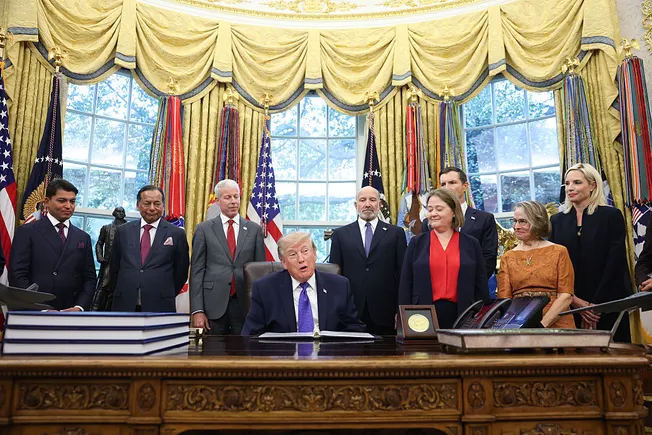
President Donald Trump has announced plans for a new $15 billion steel mill in Iowa, spearheaded by Mesabi Metallics. This venture, set to be the largest steel facility in the United States, is poised to significantly impact the domestic steel industry and the broader economy.
What Happened
The announcement, made on September 28, 2026, in the Oval Office, details the ambitious plans of Minnesota-based Mesabi Metallics, backed by the Indian conglomerate Essar Group, to construct a colossal steel mill in Iowa. The project promises to create 1,750 permanent jobs and boost annual steel production capacity by 10 million tons. The economic impact is projected to be substantial, with an estimated $95 billion added to the U.S. economy over the construction phase and the first decade of operations. Steel production is slated to commence by 2030. The mill will utilize electric arc furnace technology, incorporating recycled scrap and direct-reduced iron sourced from Minnesota, where Mesabi Metallics has recently developed an iron ore mine.
The announcement is part of the Trump administration's broader strategy to enhance domestic metals production, driven by national security concerns and military supply chain needs amid ongoing tensions with Iran. Trump's tariff policies, including the doubling of the Section 232 tariff on metal imports to 50%, have been credited with reducing foreign steel imports and boosting U.S. steel prices. This has positioned the United States ahead of Japan as a leading crude steel producer for the first time since 1999.
What This Means for Your Business
For businesses in the architecture, engineering, construction, and manufacturing (AECM) sectors, the development of the Iowa steel mill presents significant opportunities. The increase in domestic steel production capacity could stabilize supply chains and potentially moderate steel prices in the long term, despite current tariffs. This could benefit construction and manufacturing projects reliant on domestic steel.
However, the impact of high tariffs on raw materials continues to squeeze manufacturers, raising production costs and, ultimately, consumer prices. Companies should assess these dynamics in their procurement strategies and consider potential shifts in material sourcing.
Federal funding details remain sparse, with the Trump administration indicating minimal public sector involvement. This suggests that state-level incentives might play a crucial role in the project's financial structuring, presenting potential avenues for local businesses to engage with state economic development programs.
What US Operators Should Watch
U.S. operators should closely monitor the timeline for the Iowa mill's construction and production launch, particularly as steel production is anticipated to begin in 2030. Additionally, the evolving landscape of federal tariff policies could impact long-term pricing and supply chain strategies.
Operators should also be vigilant about potential state and federal funding announcements or incentives that might emerge, as these could affect competitive positioning and investment decisions. Keeping an eye on regulatory changes, especially those related to environmental and compliance standards, will be crucial as the project progresses.
Overall, the new steel mill project underscores the importance of staying informed about policy shifts and industry developments that could influence the business environment for AECM professionals.
Source: https://www.supplychaindive.com/news/trump-unveils-plans-to-build-15b-steel-mill-in-iowa/831654/. Read the original story ->
Is your firm ready for what’s next?
VisioneerIT helps AECM and government contractors modernize operations, achieve compliance, and implement AI.
Explore VisioneerIT Solutions →