Canadian architecture firm Diamond Schmitt has completed the first phase of the Toronto Metropolitan University's (TMU) new School of Medicine, marking a significant milestone in the adaptive reuse of civic architecture. This transformation, which repurposes the former Bramalea Civic Centre, integrates cutting-edge medical education facilities with public primary care services, reflecting a growing trend in sustainable architecture and urban renewal.
What Happened
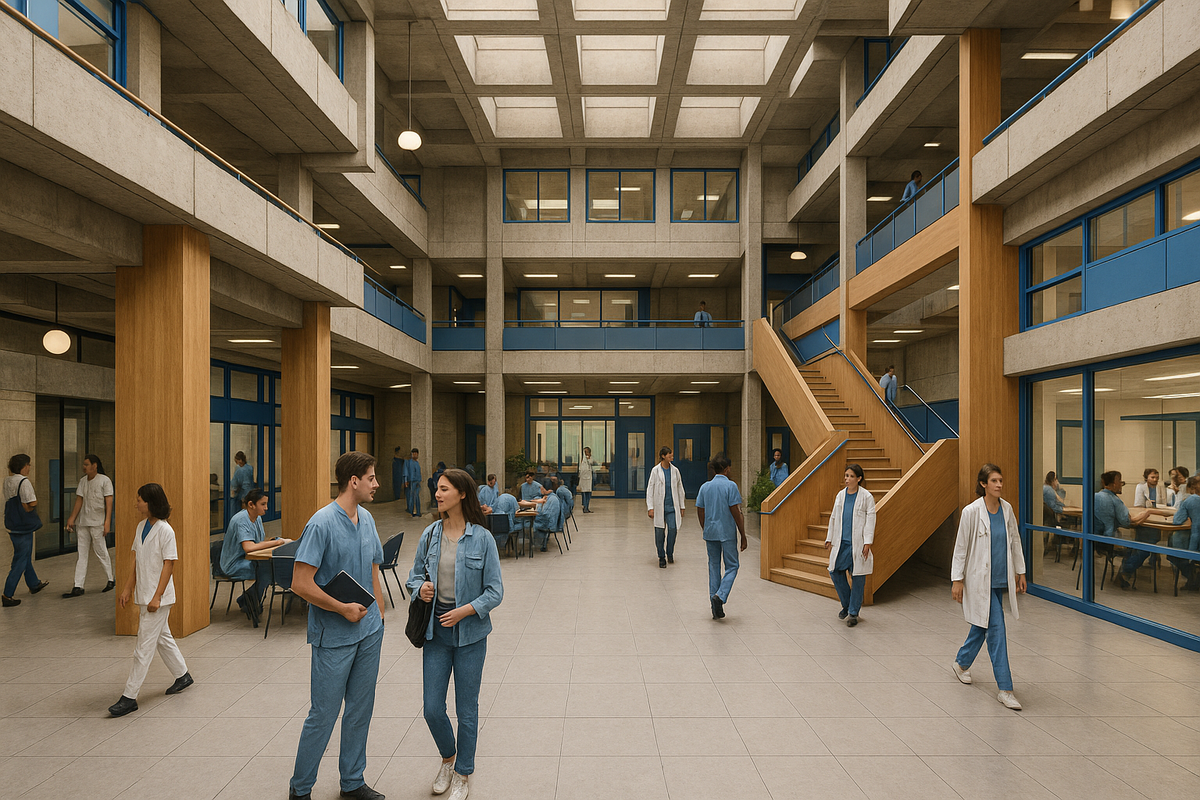
The Bramalea Civic Centre, once a bustling community hub in Toronto, has been reimagined by Diamond Schmitt into a state-of-the-art medical school, featuring a harmonious blend of wood-clad structural elements and bold blue accents. This project represents a strategic move by TMU to expand its educational offerings while contributing to urban revitalization. The renovation aligns with contemporary architectural trends that emphasize sustainability and the efficient use of existing structures.
The new TMU School of Medicine is designed to facilitate a modern academic environment that not only educates future medical professionals but also serves the community through integrated public health services. This dual-purpose approach is indicative of a broader shift in educational architecture, where institutions are increasingly expected to play active roles in community engagement and service.
What This Means for Your Business
For AECM industry professionals, the TMU project underscores the potential of adaptive reuse projects as lucrative opportunities in urban centers. With sustainability at the forefront of architectural design, projects like these offer significant competitive advantages. Firms that can demonstrate expertise in transforming existing structures into modern, functional spaces are likely to find increased demand.
Additionally, as more educational institutions look to expand their facilities while minimizing environmental impact, there is a growing market for architects and contractors skilled in integrating advanced educational technologies within existing infrastructures. By leveraging these capabilities, firms can position themselves as leaders in a market that values both innovation and sustainability.
What US Operators Should Watch
US operators should monitor trends in adaptive reuse and sustainable architecture, particularly in educational settings. As federal and state governments continue to prioritize environmental sustainability, regulations and funding opportunities are likely to favor projects that emphasize these elements.
Furthermore, those involved in government contracting should be aware of potential procurement opportunities as educational institutions seek partners for similar transformative projects. Keeping an eye on federal funding programs that support sustainable building practices could also provide a competitive edge.
Source: Dezeen. Read the original story ->
Is your firm ready for what’s next?
VisioneerIT helps AECM and government contractors modernize operations, achieve compliance, and implement AI.
Explore VisioneerIT Solutions →