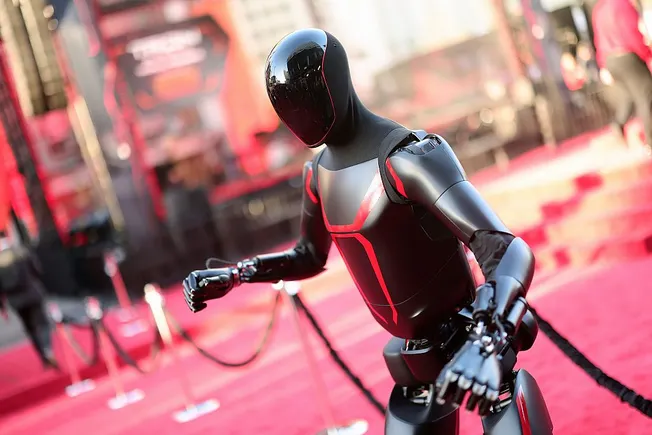
Tesla has initiated the production of its Optimus humanoid robots in Fremont, California, with plans to begin customer shipments by the end of next year. This marks a significant step in Tesla's expansion beyond electric vehicles into robotics, as announced by CEO Elon Musk during an earnings call on October 21, 2026. By leveraging its existing manufacturing infrastructure, Tesla aims to produce up to 1 million units annually, though achieving this output may take over a year due to ongoing production design adjustments.
What Happened
Tesla's venture into humanoid robotics is gaining momentum with the early production of the Optimus humanoid. The production line in Fremont is largely complete, and the company is actively working on fine-tuning its designs to achieve a production rate of 1 million robots per year. This ambitious project positions Tesla alongside competitors like Toyota and Hyundai, which are also exploring humanoid robotics for industrial applications. While Tesla's primary focus is on industrial uses for the Optimus robots, such as performing dangerous and repetitive tasks, the long-term vision includes broader applications, potentially even in domestic settings.
Elon Musk highlighted the challenges of training these autonomous robots due to the lack of existing data, unlike Tesla's self-driving cars. To address this, the company plans to establish an 'Optimus Academy' to train between 10,000 and 20,000 robots in diverse tasks, utilizing the data to enhance robot capabilities. Tesla also plans to incorporate its next-generation AI5 chips, produced at its Terafab facility in Texas, into the Optimus robots by April, enhancing their computing power.
What This Means for Your Business
For AECM professionals and government contractors, Tesla's advancements in humanoid robotics could signal transformative changes in industrial operations. The potential to automate hazardous or repetitive tasks with robots like Optimus could reduce workplace injuries and increase efficiency. Companies should consider the implications for labor costs, productivity, and competitive positioning as humanoid robotics become more integrated into industrial processes.
Furthermore, Tesla's entry into this market could influence procurement strategies, particularly for those involved in government contracts where automation and safety are prioritized. With Tesla's production capabilities and innovative technology, the Optimus robots may offer a competitive edge in bids requiring advanced robotics solutions.
What US Operators Should Watch
Industry stakeholders should closely monitor Tesla's production timeline and the rollout of the AI5 chip integration in April. Additionally, the release of Tesla's marketing video demonstrating Optimus's capabilities could provide insights into the robot's practical applications. As Tesla plans to begin shipments towards the end of next year, companies should prepare for potential procurement opportunities and evaluate how integrating humanoid robots could align with strategic goals and compliance requirements.
Source: Supply Chain Dive. Read the original story ->
Partner Insight · VisioneerIT
As Tesla advances in humanoid robotics, the integration of software engineering and digital modernization becomes crucial for optimizing production capabilities. Companies in the AECM sector can leverage these innovations to enhance their operational efficiency and competitive edge.
Explore VisioneerIT Cybersecurity →
Is your firm ready for what’s next?
VisioneerIT helps AECM and government contractors modernize operations, achieve compliance, and implement AI.
Explore VisioneerIT Solutions →