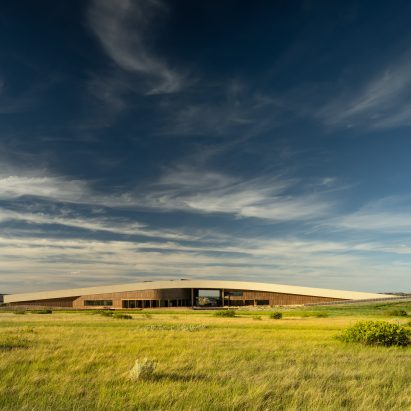
Architecture studio Snøhetta has unveiled an innovative design for the Theodore Roosevelt Presidential Library in North Dakota, featuring a unique combination of mass timber and earthen walls. This project marks a significant stride in sustainable architecture, aligning with current trends towards eco-friendly building practices.
What Happened
The Theodore Roosevelt Presidential Library, designed by Snøhetta, is set to be a landmark project that integrates seamlessly into the North Dakota landscape. Situated on a butte near Medora, the library overlooks the Theodore Roosevelt National Park. The design incorporates a green roof that mimics the surrounding hills, while the building itself is constructed using mass timber and earthen walls. This approach not only honors the natural beauty of the area but also pays homage to Theodore Roosevelt's conservation legacy.
Snøhetta's use of mass timber is a nod to the growing trend of using sustainable materials in construction. Timber, as a renewable resource, reduces the carbon footprint of the building process, aligning with global efforts to combat climate change. The earthen walls further enhance the environmental credentials of the project, offering natural insulation and reducing energy consumption.
What This Means for Your Business
For those in the architecture, engineering, construction, and manufacturing (AECM) sectors, the Theodore Roosevelt Presidential Library serves as a case study in sustainable design and construction. The use of mass timber and earthen materials presents opportunities for companies to innovate in the realm of eco-friendly building practices.
As federal and state governments increasingly prioritize sustainability, businesses that adapt to these trends stand to gain a competitive edge. Government contracts for infrastructure projects are likely to favor designs that incorporate green building techniques, providing a clear incentive for AECM firms to invest in sustainable technologies and materials.
Additionally, compliance with evolving environmental regulations, such as those related to carbon emissions and energy efficiency, will become increasingly critical. Companies that proactively integrate sustainable practices into their operations can enhance their market positioning and potentially access new funding opportunities earmarked for green projects.
What US Operators Should Watch
Decision-makers should keep an eye on upcoming federal and state procurement windows that emphasize sustainable construction. As the Theodore Roosevelt Presidential Library progresses, similar projects may arise, offering new contract opportunities for firms prepared to meet eco-friendly criteria.
It's also crucial to monitor the evolving regulatory landscape, particularly concerning building codes and sustainability standards. Staying informed about these changes will help ensure compliance and maintain eligibility for government contracts.
Source: Dezeen. Read the original story ->
Is your firm ready for what’s next?
VisioneerIT helps AECM and government contractors modernize operations, achieve compliance, and implement AI.
Explore VisioneerIT Solutions →Tracking the right federal opportunities?
OryonIQ's AI platform monitors agency forecasts, contract awards, and procurement timelines — so government contractors always know what’s coming next.
Try OryonIQ Free →