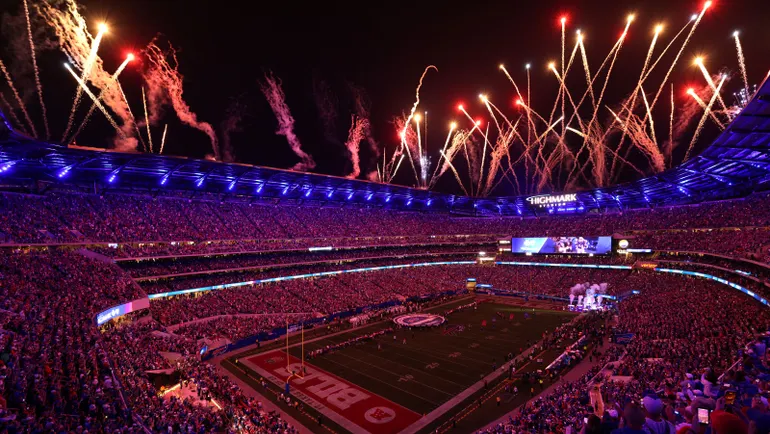
Football season is under way, and the spotlight is on newly constructed or renovated stadiums that reflect a shift in design priorities. Highmark Stadium, the $2.1 billion home of the Buffalo Bills, recently opened its doors with a reduced seating capacity that emphasizes premium experiences over sheer numbers.
What Happened
The Buffalo Bills inaugurated their new Highmark Stadium in Orchard Park, New York, on September 17, 2026, marking a significant shift in stadium design trends. The $2.1 billion project, led by Gilbane Building Co. and Turner Construction, features a seating capacity of 60,000—10,000 fewer seats than its predecessor. This reduction aligns with a broader industry trend that prioritizes premium offerings over total attendance numbers. Logan Gerken, Vice President at Mortenson, highlights the changing 'DNA' of stadiums, focusing more on exclusive areas and amenities rather than overall capacity. The shift is driven by evolving consumer preferences and the need for venues to compete with the high-definition viewing experiences available at home.
The trend is further exemplified by venues constructed in the late 1990s and early 2000s, which averaged three to five enhanced experiences. In contrast, new builds now aim for nine to twelve such offerings, including luxurious boxes, suites, lounges, and exclusive club areas. This evolution is partly due to the nature of sports like baseball and football, where significant portions of the game consist of downtime, prompting builders to enhance the on-site experience beyond the action on the field.
What This Means for Your Business
For contractors and designers in the AECM sector, this shift presents opportunities to capitalize on the demand for premium experiences. Companies can benefit by focusing on the integration of advanced mechanical, electrical, and plumbing systems to support upscale amenities like gourmet kitchens, state-of-the-art lounges, and interactive fan zones. The trend towards premium offerings could also influence procurement strategies, as projects may require more specialized materials and innovative construction techniques to accommodate these enhanced features.
Compliance with federal standards remains critical, particularly in ensuring that new designs meet safety and accessibility regulations. The emphasis on premium experiences also suggests a potential increase in project budgets, offering opportunities for higher ROI for firms that can deliver these complex projects efficiently.
What US Operators Should Watch
US operators should closely monitor upcoming federal funding opportunities and procurement windows for stadium projects, as the trend towards premium experiences may lead to new public-private partnerships. Staying informed about evolving compliance requirements, such as those related to accessibility and safety standards, will be crucial for firms looking to secure contracts in this evolving market. Additionally, keeping an eye on key project timelines and bidding opportunities will be essential for companies aiming to position themselves as leaders in the modern stadium construction landscape.
Is your firm ready for what’s next?
VisioneerIT helps AECM and government contractors modernize operations, achieve compliance, and implement AI.
Explore VisioneerIT Solutions →