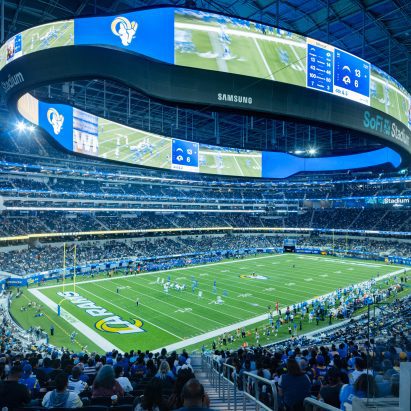
Inglewood, California's SoFi Stadium, designed by HKS, has not only captured attention for its architectural grandeur but also set a new global standard for integrated stadium technology. As the world's most expensive sports venue, SoFi Stadium's technological advancements are redefining expectations in sports architecture, impacting future designs and investments in the AECM sector.
What Happened
SoFi Stadium, located in Inglewood, California, represents a pinnacle in modern sports architecture with its cutting-edge technology and design. Conceived by the US-based HKS studio, the stadium is distinguished by its massive videoboard, which ranks among the largest worldwide. This technological marvel is not just a spectacle for visitors but a testament to the integration of advanced digital solutions in sports venues. The stadium, with its record-breaking construction costs, has become a benchmark for future sports architecture projects globally. Its design integrates technology seamlessly into the spectator experience, setting a precedent for stadiums worldwide.
What This Means for Your Business
For AECM professionals, SoFi Stadium's technological integration offers critical insights into future-ready design and construction practices. The emphasis on digital solutions highlights a growing trend towards technology-centric architecture, which can significantly impact procurement strategies and competitive positioning. Businesses engaged in government contracting or seeking federal funding for infrastructure projects should note the potential for increased investments in similar high-tech developments. The stadium's success demonstrates the importance of incorporating advanced technology to enhance user experience and operational efficiency, underscoring potential ROI benefits. Additionally, compliance with evolving standards such as NIST and Zero Trust becomes increasingly relevant as infrastructure projects adopt more complex digital frameworks.
What US Operators Should Watch
As the AECM industry moves towards more technology-integrated projects, operators should closely monitor shifts in regulatory standards and procurement timelines that affect such developments. Keeping abreast of federal deadlines for technology adoption and compliance audits, like CMMC, is crucial for maintaining competitive advantage. Additionally, bid opportunities for similar infrastructure projects could arise, with federal funding potentially supporting innovative, technology-driven designs. Staying informed on these fronts will be essential for decision-makers aiming to capitalize on emerging trends in the industry.
Source: https://www.dezeen.com/2026/07/15/sofi-stadium-los-angeles-integrated-technology-case-study/. Read the original story ->
Is your firm ready for what’s next?
VisioneerIT helps AECM and government contractors modernize operations, achieve compliance, and implement AI.
Explore VisioneerIT Solutions →