Siemens is revolutionizing additive manufacturing by integrating Industrial AI to create an end-to-end Digital Thread that enhances product development and production processes. This innovation, showcased at Siemens' Electronics Factory in Erlangen, Germany, signals a significant advancement in how products are engineered and manufactured, promising more adaptive and efficient production capabilities.
What Happened
Siemens has unveiled a groundbreaking approach by implementing an end-to-end Digital Thread powered by Industrial AI. This new system connects engineering and production processes seamlessly, allowing individual product requirements to transition smoothly from design to manufacturing. The company, in collaboration with AGIBOT, demonstrated this capability using a gripper for a humanoid robot. Instead of requiring manual design adjustments, the user simply describes the object and task, and an Agentic AI workflow takes over. This AI orchestrates engineering steps, adapting designs, simulating them, and preparing them for additive manufacturing. The goal is to make complex engineering workflows more accessible by minimizing direct interaction with each engineering tool and process step.
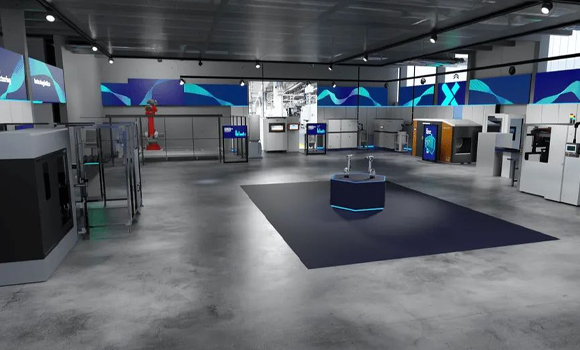
Furthermore, Siemens is extending its adaptive approach from engineering into production. The company's new adaptive production cell integrates additive manufacturing, automation, post-processing, and software into a cohesive process chain. Collaborating with EOS and AM Solutions, Siemens aims to create a flexible production environment capable of accommodating diverse components and production requirements efficiently.
What This Means for Your Business
The integration of Industrial AI into additive manufacturing represents a pivotal shift for businesses in the architecture, engineering, construction, and manufacturing sectors. For companies engaged in federal contracting, this technology offers a competitive edge by significantly reducing the time and cost associated with custom product development. Siemens' approach could streamline procurement processes by enabling faster adaptation to specific contract requirements and enhancing the capability to meet diverse client needs with customized solutions. It also aligns with federal initiatives that emphasize innovation and efficiency, potentially opening up new funding opportunities for businesses that adopt these advanced manufacturing practices.
From a compliance perspective, the move towards a Digital Thread supported by AI may necessitate updates in cybersecurity measures, such as adhering to CMMC and NIST standards, to protect intellectual property and sensitive data within these interconnected systems.
What US Operators Should Watch
US operators should monitor the development and implementation timeline of Siemens' adaptive production cell, as it could define new industry standards. Staying informed about Siemens' progress and similar innovations in the field will be crucial for maintaining competitive positioning. Additionally, tracking federal procurement windows and funding opportunities related to advanced manufacturing technologies could provide strategic advantages. Adapting to these technological changes will be critical for companies aiming to leverage new capabilities and enhance their operational efficiency.
Source: Advanced Manufacturing. Read the original story ->
Partner Insight · VisioneerIT
The integration of Industrial AI into additive manufacturing not only enhances production capabilities but also necessitates robust cybersecurity measures to protect sensitive data. VisioneerIT's expertise in CMMC compliance can help businesses navigate these challenges effectively.
Explore VisioneerIT Cybersecurity →
Is your firm ready for what’s next?
VisioneerIT helps AECM and government contractors modernize operations, achieve compliance, and implement AI.
Explore VisioneerIT Solutions →