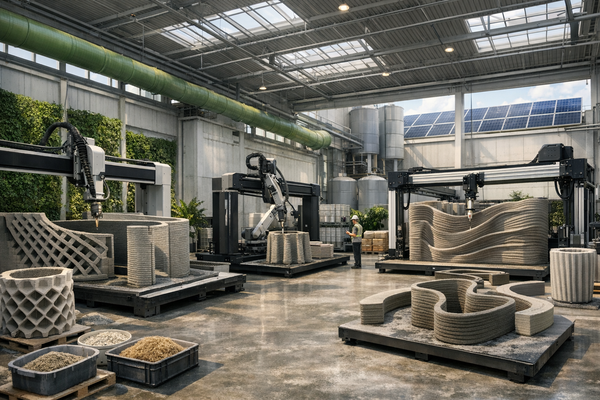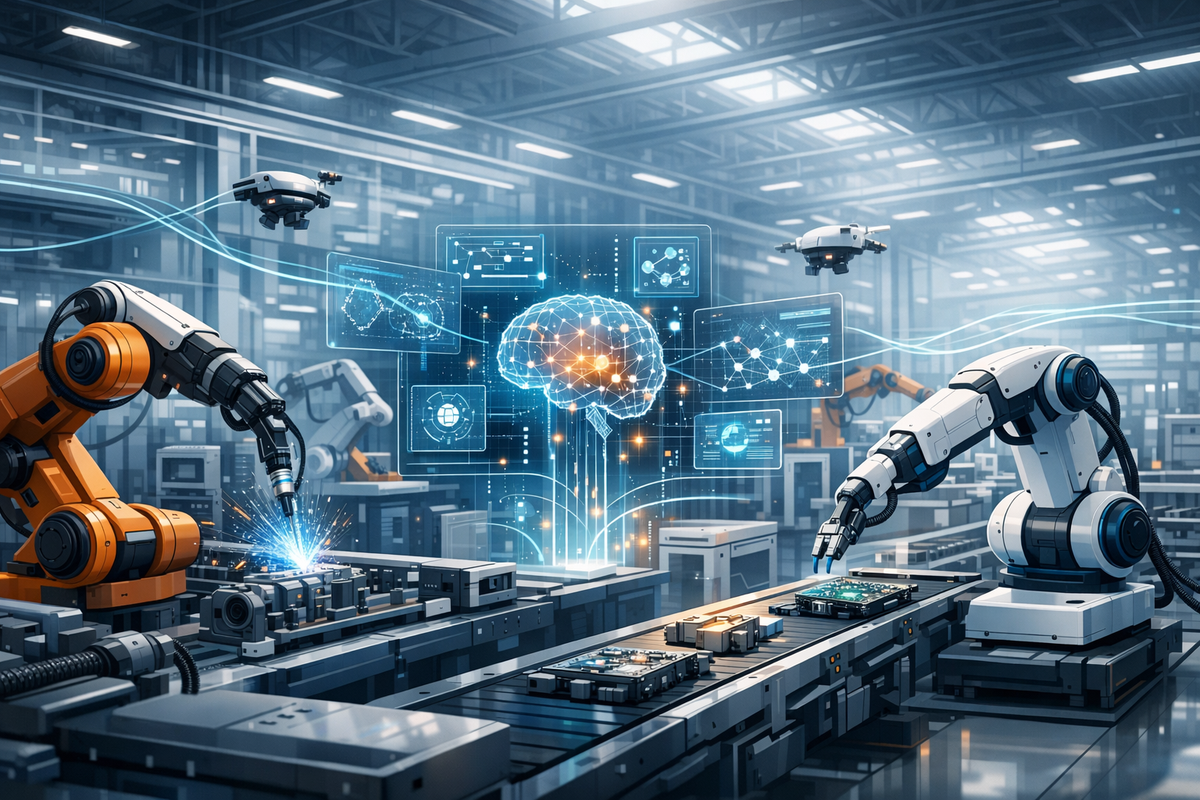
Siemens is spearheading a transformative leap in industrial manufacturing by integrating agentic AI with adaptive additive manufacturing. Collaborating with AGIBOT, EOS, and AM Solutions, Siemens aims to streamline product design and production, significantly reducing engineering time for customized components.
What Happened
Siemens, a global leader in technology, is advancing a new AI-driven manufacturing system that connects product design directly with industrial production. This initiative, in collaboration with AGIBOT, EOS, and AM Solutions, introduces an integrated Digital Thread that links product development, virtual validation, and production. The system is being demonstrated through an AI-enabled engineering workflow for a humanoid robot gripper and plans for an adaptive production cell at Siemens' Electronics Factory in Erlangen, Germany.
The core of this innovation lies in agentic AI, which translates natural-language instructions into engineering tasks traditionally requiring specialized software skills. For example, in creating a robotic gripper, the AI interprets user requirements, selects the appropriate configuration, and coordinates the engineering workflow. This integration allows for the adaptation of component geometry, simulation, and validation, significantly reducing manual effort and enabling broader participation in product development.
What This Means for Your Business
For AECM professionals and government contractors, Siemens' initiative has profound implications. The integration of AI and additive manufacturing promises to reduce the complexity and cost of producing customized components. This could lead to faster procurement cycles and improved ROI by minimizing the need for extensive manual engineering interventions.
Moreover, the shift towards AI-driven workflows aligns with federal mandates for cutting-edge manufacturing technologies, opening up potential federal funding and contracts for companies adopting these innovations. For businesses in the defense industrial base, particularly, the ability to rapidly prototype and produce components to precise specifications could enhance competitive positioning and compliance with evolving standards like CMMC and NIST.
What US Operators Should Watch
Decision-makers should monitor Siemens' advancements as they may set new industry benchmarks for manufacturing efficiency and customization. Key timelines include the rollout of Siemens' adaptive production cell and further demonstrations of AI-enabled workflows. Businesses should also stay informed about potential federal funding opportunities for integrating AI and additive manufacturing technologies.
Source: https://www.intelligentcio.com/eu/2026/11/17/siemens-brings-agentic-ai-into-industrial-manufacturing/. Read the original story ->
Is your firm ready for what’s next?
VisioneerIT helps AECM and government contractors modernize operations, achieve compliance, and implement AI.
Explore VisioneerIT Solutions →