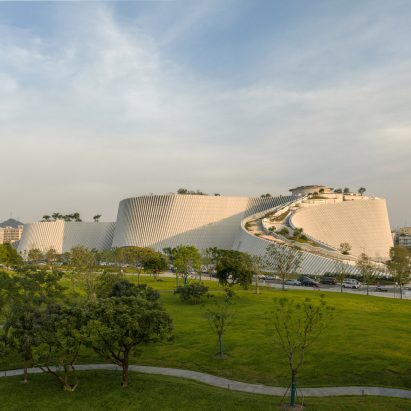
The Shenzhen Natural History Museum has opened its doors, showcasing an architectural marvel that combines artistic flair with functional space. Designed by 3XN, B+H Architects, and Zhubo Design, the 100,000-square-metre structure in Pingshan District is a testament to innovative design and cultural ambition.
What Happened
The Shenzhen Natural History Museum, now a prominent feature in the Pingshan District of China, was designed to resemble "a piece of landscape." The collaborative effort between 3XN, B+H Architects, and Zhubo Design has resulted in a building that seamlessly integrates with its environment. The museum's exterior is cloaked in granite, which not only adds an aesthetic appeal but also provides durability and sustainability. The building's fluid form rises from the ground, creating a dynamic and inviting space for visitors. The museum is strategically planned to serve as a cultural landmark, reflecting the city's commitment to fostering cultural and educational advancements.
What This Means for Your Business
For architecture and construction professionals in the U.S., the Shenzhen Natural History Museum exemplifies the potential of innovative design in large-scale projects. The use of granite and the building's integration into the landscape highlight the importance of material selection and environmental consideration in modern architecture. U.S. firms can draw inspiration from this project for upcoming cultural or public infrastructure developments, particularly in urban settings. The project underscores the competitive edge that can be gained by combining aesthetic appeal with functional design and sustainability practices. Additionally, the museum's execution provides a case study in successful international collaboration, which can be crucial for securing and executing large contracts.
What US Operators Should Watch
U.S. architecture and construction firms should pay close attention to the growing trend of integrating natural forms and sustainable materials in design. This approach not only enhances the aesthetic value of buildings but also meets increasing regulatory and consumer demands for sustainability. Keeping abreast of global architectural innovations can provide a competitive advantage in securing government and private sector contracts. Furthermore, professionals should monitor emerging technologies and materials that facilitate such groundbreaking designs, as these could become key differentiators in future projects.
Source: https://www.dezeen.com/2026/07/28/shenzhen-natural-history-museum-3xn/. Read the original story ->
Is your firm ready for what’s next?
VisioneerIT helps AECM and government contractors modernize operations, achieve compliance, and implement AI.
Explore VisioneerIT Solutions →