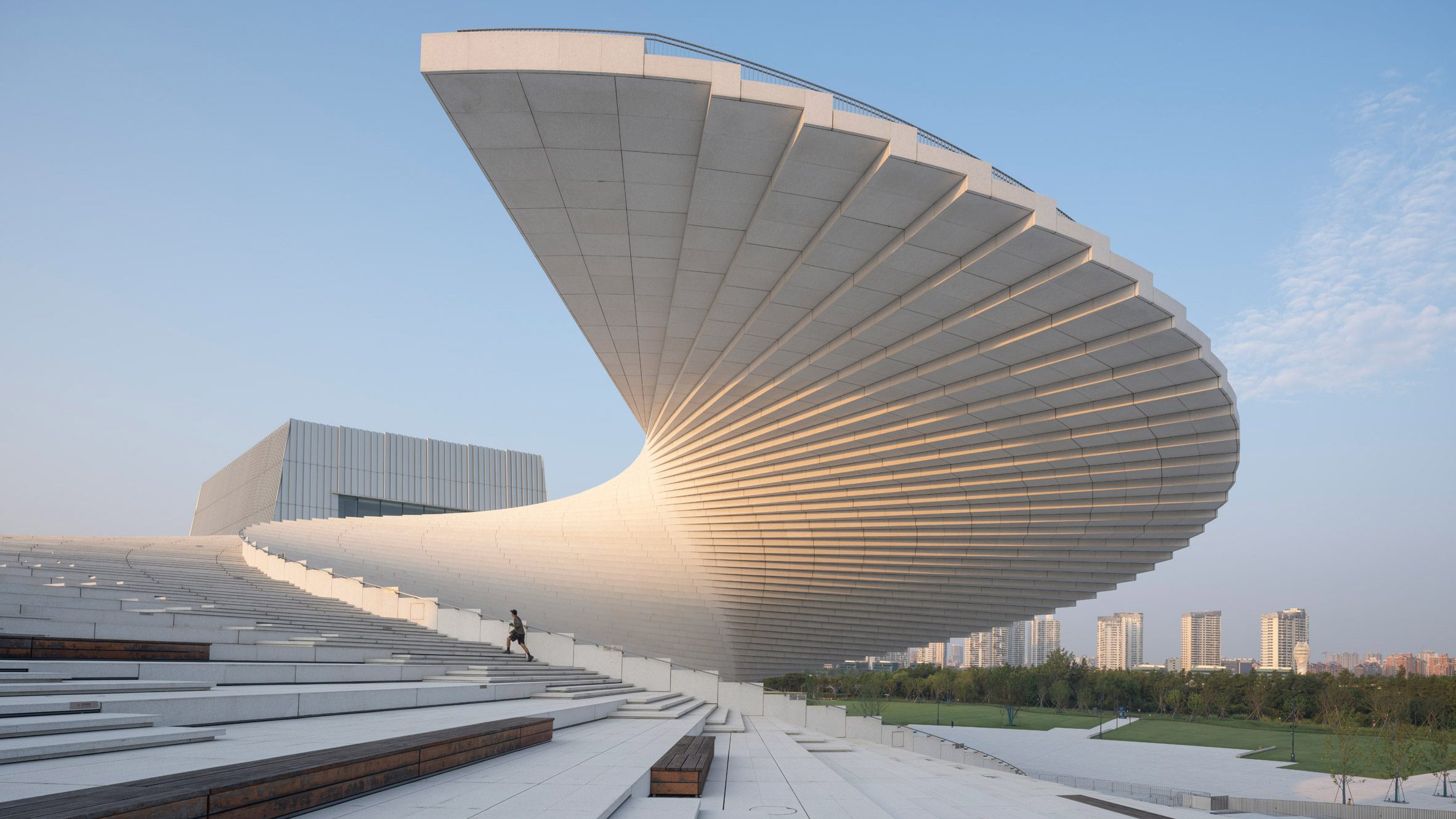
The Shanghai Grand Opera House, a stunning new cultural landmark designed by international architecture firm Snøhetta, has officially opened its doors on the Huangpu River waterfront. This iconic structure, with its defining spiral staircase that invites visitors to its rooftop, is designed to serve as both a civic destination and a performance venue. As cities worldwide strive to blend cultural spaces with public accessibility, the completion of this 146,786-square-metre project marks a significant milestone in contemporary architecture.
What Happened
Snøhetta, known for its innovative design approach, has completed the Shanghai Grand Opera House, a project that began with an in-depth understanding of the site's cultural and environmental context. The design features a radial plan, housing three auditoriums with a combined seating capacity of 4,200. The Harmony Hall, the main auditorium, can accommodate 2,000 people across five levels, while the Soar Theatre offers a more intimate setting with 1,200 seats. The final auditorium, with 1,000 seats, is designed for flexibility, catering to experimental performances. The opera house's facade alternates between transparent and opaque finishes, enhancing its connection to the surrounding urban landscape.
What This Means for Your Business
For AECM professionals, the Shanghai Grand Opera House exemplifies the potential for architectural projects to serve multiple community functions, enhancing ROI through increased public engagement. The design challenges traditional thresholds of cultural venues, suggesting that future contracts and proposals should consider the dual role of such structures as public spaces. This approach aligns with growing trends in urban planning that prioritize accessibility and community integration, offering a competitive edge in securing government and private sector contracts.
What US Operators Should Watch
As this project sets a new benchmark in design and functionality, US operators should monitor similar developments in cultural architecture. The emphasis on public accessibility and flexible use could influence upcoming federal and municipal procurement opportunities. Keeping an eye on international design trends can provide insights into future compliance requirements and potential funding avenues for projects that blend civic and cultural purposes.
Source: https://www.dezeen.com/2026/10/17/snohetta-shanghai-grand-opera-house/. Read the original story ->
Is your firm ready for what’s next?
VisioneerIT helps AECM and government contractors modernize operations, achieve compliance, and implement AI.
Explore VisioneerIT Solutions →