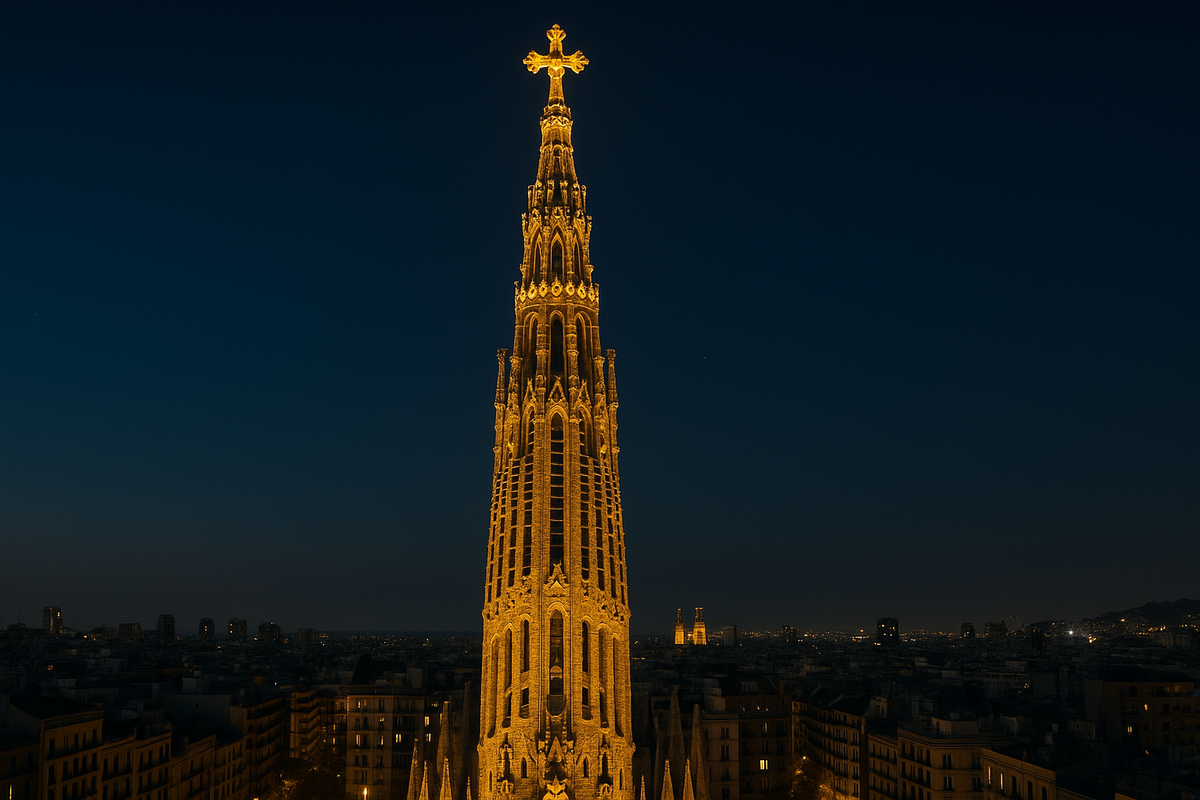
A century after Antoni Gaudí's passing, the central tower of the Sagrada Familia is set for inauguration by Pope Leo XIV. The event celebrates not just the completion of a monumental architectural feat but highlights the prescient design innovations that have kept the structure relevant for over a hundred years.
What Happened
The Sagrada Familia, a UNESCO World Heritage site, has been a work in progress since 1882, with its completion date now projected for 2026. The central tower, reaching 172.5 meters, is the tallest of the basilica's 18 towers and is a testament to Gaudí's forward-thinking design principles. Gaudí's use of algorithmic design was far ahead of his time, employing mathematical principles and natural forms to create a structure that is both complex and harmonious. This design approach, now common in modern architecture, underscores Gaudí's almost clairvoyant understanding of future architectural trends.
What This Means for Your Business
For architecture, engineering, and construction management (AECM) professionals, the Sagrada Familia offers a case study in the integration of innovative design with traditional craftsmanship. Gaudí's work demonstrates the value of combining cutting-edge technology with artisanal skills, a balance that is crucial for firms aiming to stay competitive in today's market. The project also exemplifies the benefits of long-term vision in architectural design, emphasizing sustainability and adaptability, which are increasingly important in securing federal contracts and meeting regulatory compliance.
What US Operators Should Watch
As the completion of the Sagrada Familia approaches, AECM professionals should monitor advances in algorithmic design and digital fabrication technologies that can enhance project execution and cost efficiency. The project's timeline and phased construction approach offer insights into managing large-scale, long-term projects, which can be crucial for firms involved in government contracts where precision and adherence to timelines are critical. Additionally, as the industry moves toward more sustainable practices, Gaudí's approach to integrating natural forms and materials could inform future regulatory standards and compliance requirements.
Source: Dezeen. Read the original story ->
Is your firm ready for what’s next?
VisioneerIT helps AECM and government contractors modernize operations, achieve compliance, and implement AI.
Explore VisioneerIT Solutions →