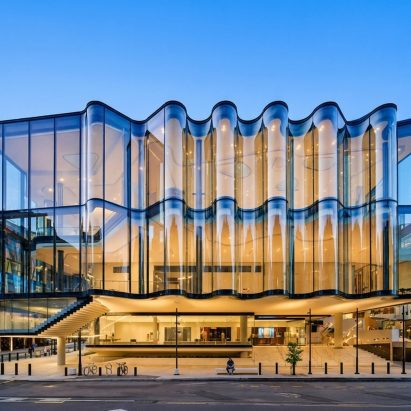
The Royal Danish Academy has showcased a groundbreaking project in Mérida, Mexico, featuring a social housing center complete with a shaded football pitch. This initiative is part of a broader exhibition highlighting innovative designs from the academy's students, including a knitted wool pavilion that fosters interconnected microclimates and a gamified mobile app aimed at reducing food waste.
What Happened
The Royal Danish Academy's recent reveal of student projects underscores a commitment to addressing global challenges through innovative design. The centerpiece, a social housing center in Mérida, integrates community needs by combining living spaces with recreational facilities, such as a shaded football pitch. This approach not only addresses housing shortages but also promotes community engagement and physical well-being. The inclusion of other projects, like the knitted wool pavilion, showcases the academy's focus on sustainability and climate-responsive design. Meanwhile, the mobile app project aims to tackle food waste by engaging users in a gamified experience, promoting responsible consumption.
What This Means for Your Business
For AECM professionals, these projects represent a significant shift towards integrating social issues with architectural design. The Mérida project, in particular, highlights the potential for architects and construction firms to secure contracts that prioritize community and environmental benefits. As governments and private entities increasingly invest in socially responsible developments, firms that align with these values may find new opportunities for federal funding and public-private partnerships. Moreover, the emphasis on sustainability and innovative technology, as seen in the wool pavilion and the app, aligns with emerging compliance requirements such as CMMC and NIST, which increasingly incorporate environmental considerations.
What US Operators Should Watch
US operators should monitor developments in international architectural trends that emphasize sustainability and social impact, as these are likely to influence domestic procurement standards and funding priorities. Upcoming federal budgets and grant announcements may prioritize projects that offer community benefits and innovative design solutions. Staying informed about global design exhibitions and trends, like those from the Royal Danish Academy, can provide a competitive edge in bidding for future projects that align with these emerging priorities.
---
Source: Dezeen. Read the original story ->
Is your firm ready for what’s next?
VisioneerIT helps AECM and government contractors modernize operations, achieve compliance, and implement AI.
Explore VisioneerIT Solutions →Tracking the right federal opportunities?
OryonIQ's AI platform monitors agency forecasts, contract awards, and procurement timelines — so government contractors always know what’s coming next.
Try OryonIQ Free →