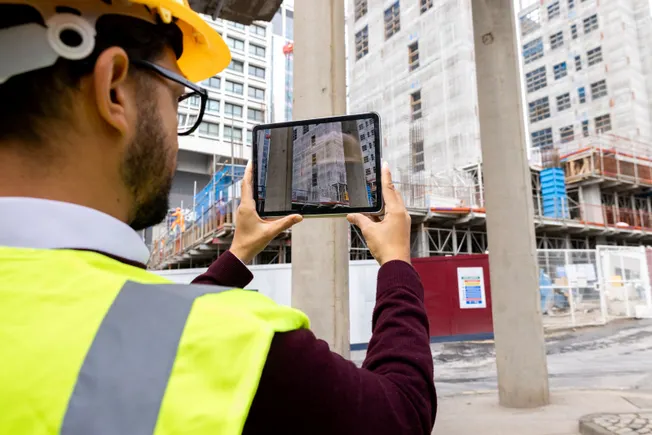
As the construction industry explores the integration of robotics into job sites, Boston Dynamics construction manager Brian Ringley highlights a shift from mere automation to enhancing data feedback mechanisms. This evolution in robotics usage is not about taking over building tasks but rather about improving data flow and collaboration among stakeholders.
What Happened
Boston Dynamics' Brian Ringley recently emphasized the emerging role of robotics in construction, focusing on their potential to enhance data feedback loops rather than automate physical building tasks. According to Ringley, the current design-bid-build delivery model, which is risk-averse and siloed, limits the feasibility of using robots for direct construction tasks. Instead, he argues that robots can play a crucial role as data providers on construction sites, employing reality capture technologies to gather site data continuously. This data, when processed with machine learning applications, can improve situational awareness and produce functioning as-builts, thus fostering more productive dialogue between stakeholders.
Why It Matters for the AECM Industry
The integration of robots as data feedback providers on construction sites could significantly enhance the industry's efficiency and accuracy. By continuously collecting and processing site data, robots can help maintain up-to-date as-built models, which are crucial for accurate Building Information Modeling (BIM). This could lead to improved project outcomes, reduced errors, and enhanced collaboration among architects, engineers, and contractors. Furthermore, by enabling a more dynamic exchange of information, the construction industry may see a shift towards more integrated and collaborative project delivery methods, breaking away from the traditional design-bid-build approach.
What's Next
As the construction industry continues to explore the potential of robotics, professionals should monitor advancements in reality capture technologies and machine learning applications. Upcoming developments in these areas could further enhance the role of robots in creating efficient data feedback loops on construction sites. Industry stakeholders should also consider how these technologies can be integrated into existing workflows to maximize their benefits, potentially leading to a new era of construction project management.
Is your firm ready for what’s next?
VisioneerIT helps AECM and government contractors modernize operations, achieve compliance, and implement AI.
Explore VisioneerIT Solutions →