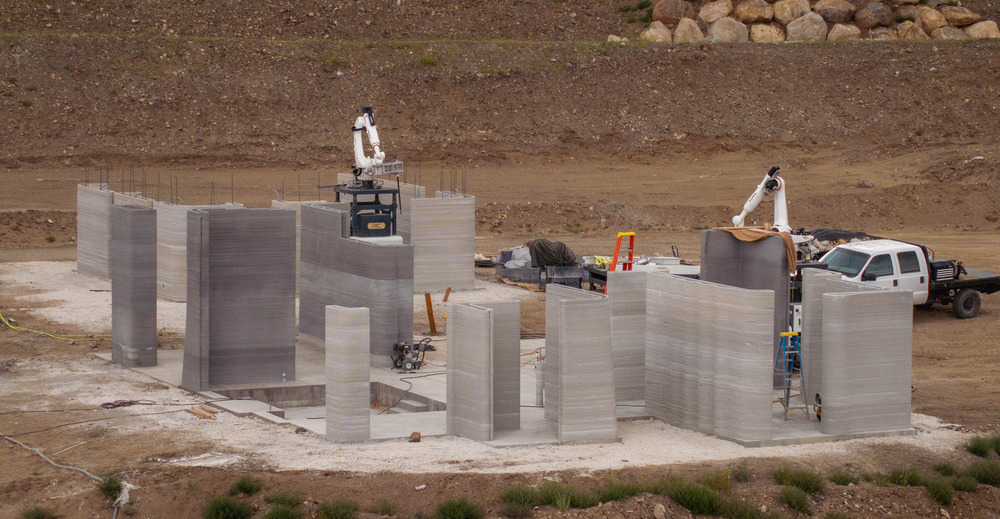
Autonomous robots are set to redefine construction practices in the U.S. with the development of Cleora, a groundbreaking 55-acre residential project in Salida, Colorado. With 106 homes planned, it marks a significant step in applying 3D-printing technology on a large scale, potentially transforming how communities are built.
What Happened
Cleora is poised to become one of the largest printed neighborhoods in the world, featuring not just residential properties but also commercial, recreational, utilities, and water treatment facilities. RIC Robotics, a California-based company, has deployed two autonomous systems to print 65 homes in the development. The initiative underscores a shift from experimental prototypes to scalable, practical applications of robotics in construction. The project is a collaborative effort that includes educational partnerships, offering students at Colorado Mountain College hands-on experience with cutting-edge 3D-printing and digital design technologies. Greg Kenny, managing partner of Cleora, highlights the vision behind the project: "Our goal was not just to build 3D-printed homes but to demonstrate that robotics can revolutionize community design and delivery at scale." Ziyou Xu, founder of RIC Robotics, added that the project proves construction robotics can create architecturally distinctive homes without inflating costs for homeowners. The neighborhood has been designated a Colorado metro district, enabling access to lower-interest financing for infrastructure development.
What This Means for Your Business
For AECM professionals, Cleora represents a pivotal moment in construction innovation, offering a template for future developments that prioritize cost-efficiency and sustainability. The use of autonomous robots not only accelerates construction timelines but also reduces labor costs, potentially increasing ROI for developers. As robotics in construction becomes more mainstream, companies that integrate these technologies will likely gain a competitive edge. Moreover, Cleora's metro district status provides a model for leveraging financial mechanisms to fund infrastructure in large-scale projects, which could be particularly advantageous for developers seeking to minimize upfront costs.
What US Operators Should Watch
With the Cleora project set for completion by 2029, driven by market demand, industry professionals should monitor the evolving regulatory landscape surrounding 3D-printed constructions. This includes potential changes in building codes and compliance standards as these technologies become more widespread. Additionally, the ongoing partnership with Colorado Mountain College could indicate a growing trend of integrating education and industry, offering a pipeline of skilled labor trained in robotics and digital construction technologies. Stakeholders should also keep an eye on market demand trends that will dictate the project's timeline and potential replication in other regions.
Source: https://www.globalconstructionreview.com/robots-build-one-of-worlds-largest-printed-neighbourhoods/. Read the original story ->
Is your firm ready for what’s next?
VisioneerIT helps AECM and government contractors modernize operations, achieve compliance, and implement AI.
Explore VisioneerIT Solutions →Tracking the right federal opportunities?
OryonIQ's AI platform monitors agency forecasts, contract awards, and procurement timelines — so government contractors always know what’s coming next.
Try OryonIQ Free →
