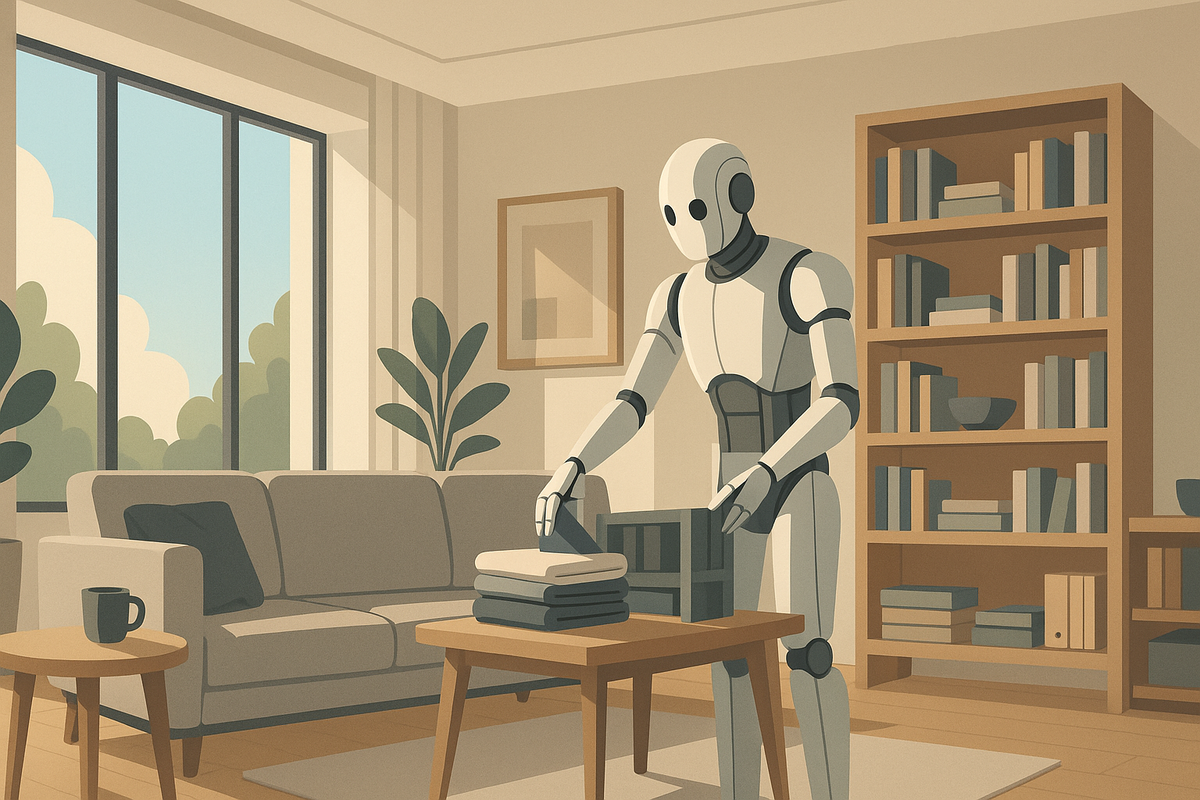
The advent of robotic technology in 2026 is poised to redefine how households manage everyday tasks, with implications that extend into the architecture and construction industries.
What Happened
The year 2026 has been marked by significant advancements in household robotics, aiming to alleviate the burden of domestic chores. A notable product is the C-200 ultrasonic knife by Seattle Ultrasonics, which vibrates at over 30,000 times per second, making kitchen tasks more efficient. While these innovations primarily target consumer markets, their development signals a broader trend towards automation that could influence residential architecture and construction. The integration of such technologies requires homes to be designed with smart infrastructure capable of supporting advanced robotics, potentially altering design priorities and construction methodologies.
Why It Matters for the AECM Industry
The introduction of household robotics presents new opportunities and challenges for the AECM industry. As homes increasingly incorporate smart technologies, architects and builders must adapt designs to accommodate these systems. This could lead to a shift in demand for materials and layouts that support integrated technology solutions, such as smart wiring and dedicated spaces for robotic appliances. Additionally, the construction process itself may evolve as automation technologies are developed for industrial applications, influencing labor dynamics and project timelines. For engineers, the need to design systems that seamlessly integrate with smart home technologies will be crucial, requiring new skills and knowledge.
What's Next
Looking ahead, the AECM industry should monitor the adoption rates and consumer feedback of these robotic products. As demand grows, it may prompt regulatory changes or updates to building codes to ensure compatibility and safety of smart technologies in residential settings. Industry professionals should prepare for potential shifts in project specifications and client expectations, as the integration of robotics becomes a standard consideration in home design and construction.
Is your firm ready for what’s next?
VisioneerIT helps AECM and government contractors modernize operations, achieve compliance, and implement AI.
Explore VisioneerIT Solutions →