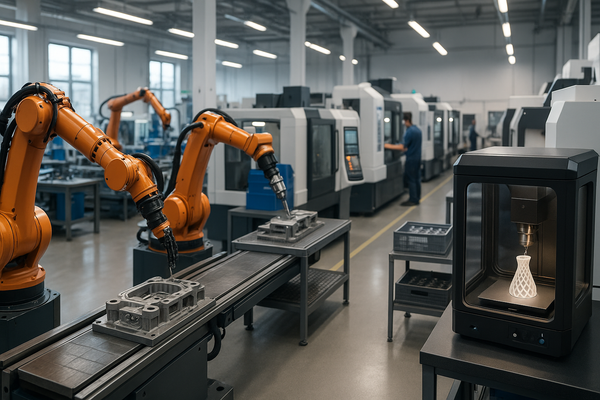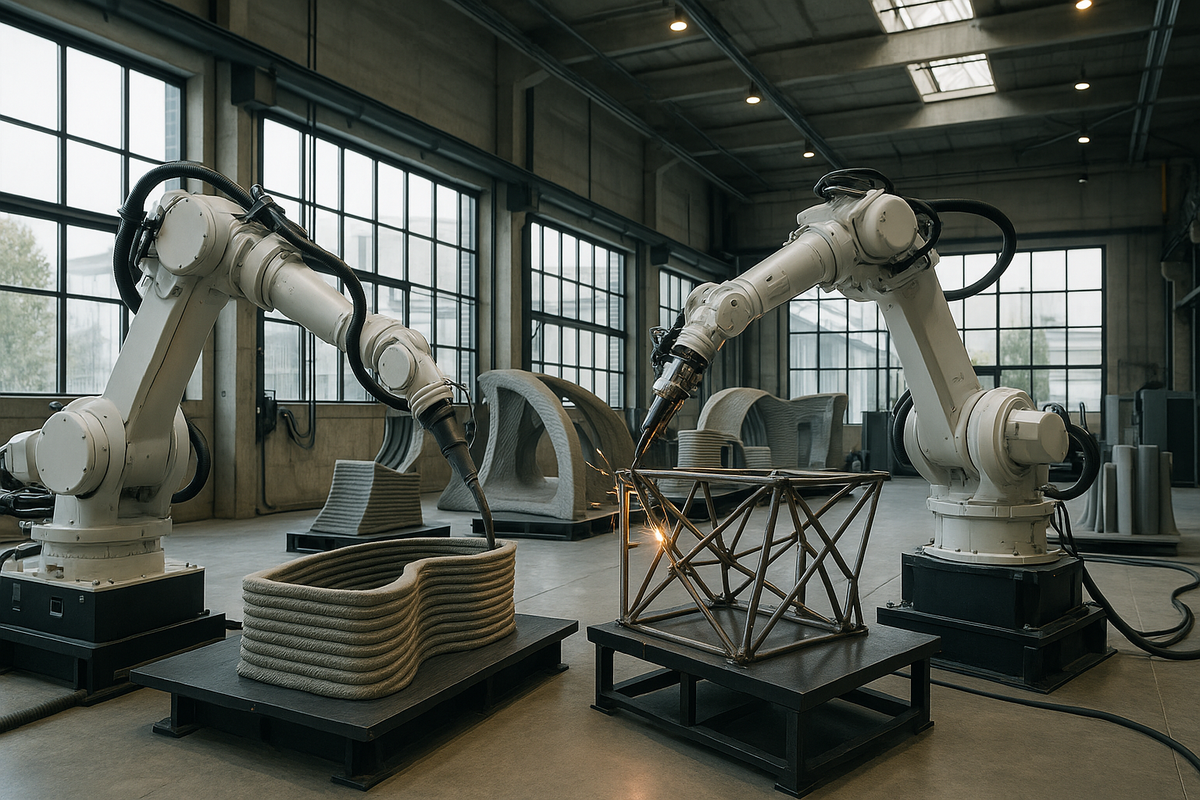
Designtech, Caracol, and LAMÁQUINA have unveiled a state-of-the-art large-format additive manufacturing (LFAM) hub in Milan, marking a significant milestone in the integration of design and industrial-grade 3D printing. This development offers a transformative opportunity for the architecture, engineering, construction, and manufacturing (AECM) sectors by advancing the capabilities and applications of robotic 3D printing.
What Happened
In a strategic alliance, Designtech, Caracol, and LAMÁQUINA have launched a permanent large-format robotic additive manufacturing facility in Milan. This hub aims to connect the design community with cutting-edge industrial-grade 3D printing technologies. The facility leverages Caracol's expertise in LFAM, integrating advanced robotic systems capable of producing large-scale, complex components with superior precision and speed. By being situated in Milan, a city known for its rich design heritage, the hub is poised to become a pivotal center for innovation and collaboration between designers and manufacturers.
What This Means for Your Business
For U.S. operators in the AECM industry, this development underscores the growing importance of adopting advanced manufacturing technologies to remain competitive. The Milan hub presents a model that could inspire similar initiatives in the United States, potentially unlocking new pathways for innovation and efficiency in production processes. Companies may look into partnerships or technology transfers to integrate robotic 3D printing into their operations, which could lead to significant cost savings, reduced material waste, and enhanced design flexibility. Moreover, as the demand for sustainable and efficient manufacturing processes increases, leveraging LFAM technology can help companies meet stringent regulatory and environmental standards.
What US Operators Should Watch
U.S. businesses should closely monitor the advancements and outcomes from the Milan facility to understand the practical applications and benefits of LFAM. Keeping an eye on potential federal funding opportunities or incentives for innovation in manufacturing technologies will be crucial. Additionally, companies engaged in defense contracting should consider the implications of adopting such technologies in compliance with evolving cybersecurity frameworks like CMMC and NIST standards. With the increasing focus on sustainability and efficiency, operators should evaluate how these technologies can align with their long-term strategic goals.
Source: https://www.designnews.com/3d-printing/designtech-caracol-and-lam-quina-launch-a-large-format-robotic-additive-manufacturing-hub-in-milan. Read the original story ->
Is your firm ready for what’s next?
VisioneerIT helps AECM and government contractors modernize operations, achieve compliance, and implement AI.
Explore VisioneerIT Solutions →