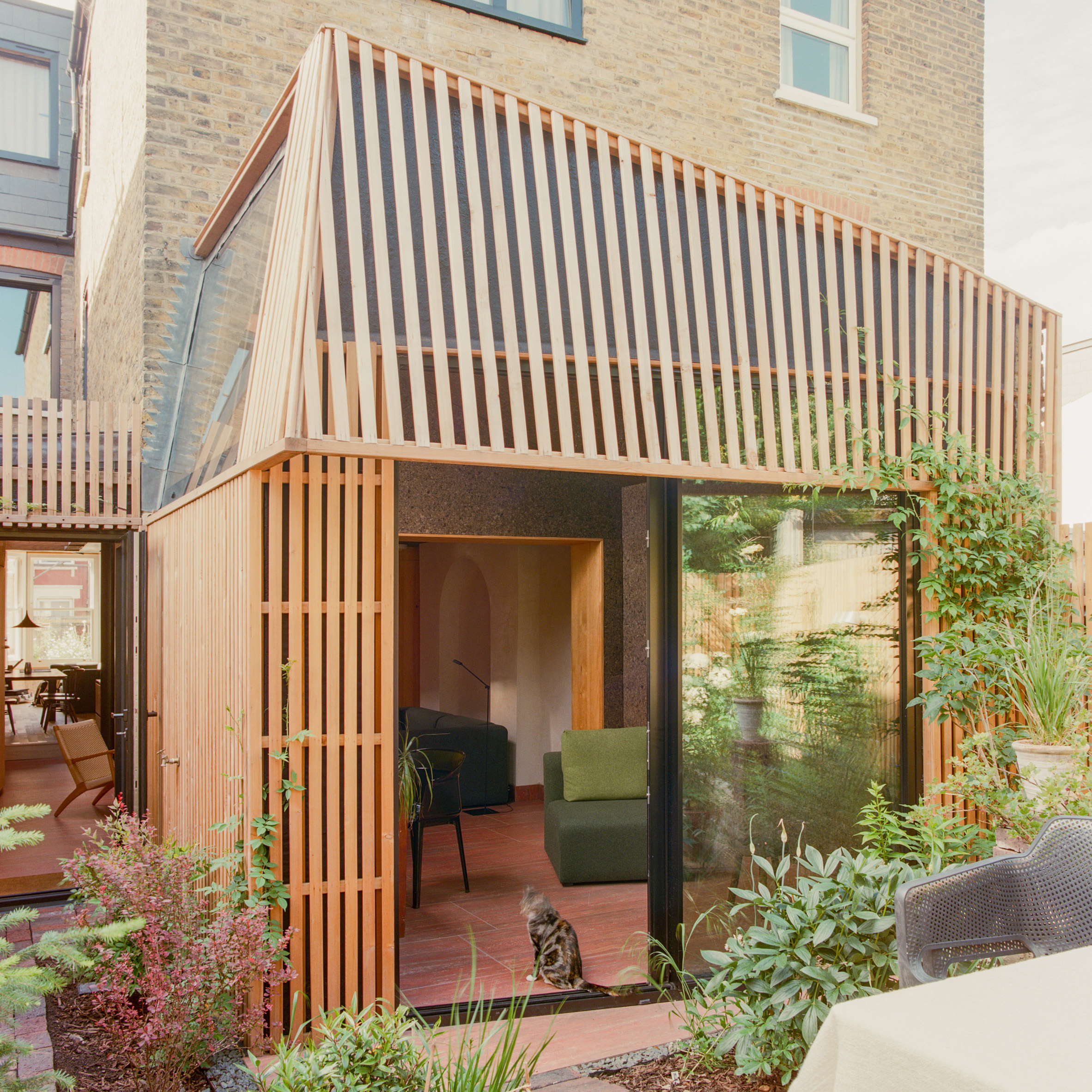
Lime-plastered brickwork, timber boards, and cork panels shine in Pine House, a London terraced home radically reimagined by local architecture studio Polysmiths. As urban spaces grapple with the constraints of Victorian architecture, Polysmiths' innovative approach to using light as a primary material offers a new blueprint for AECM professionals.
What Happened
Polysmiths, led by founder Charles Wu, has completed a renovation in Peckham, London, transforming a traditional Victorian terrace into an expansive, light-filled home. The renovation addressed the "well-known limitations" of such structures—namely, their narrow plans and poor daylight penetration. By creating a double-height void at the center of the home, Polysmiths opened up the space, allowing light to become a central design element. The ground floor features a single axis that connects a front reception room with a bay window to an angular glazed garden room at the rear, enhancing the flow of natural light throughout the home.
What This Means for Your Business
For AECM professionals, the Pine House project underscores the potential of light as a transformative design tool in urban renovations. This approach not only addresses aesthetic and spatial challenges but can also improve energy efficiency by maximizing natural light, potentially reducing reliance on artificial lighting. The use of materials like lime-plastered brickwork and cork panels also highlights opportunities for sustainable design practices, aligning with increasing regulatory and consumer demands for eco-friendly construction. Firms that integrate similar strategies could enhance their competitive positioning and offer innovative solutions in dense urban environments.
What US Operators Should Watch
As cities worldwide continue to modernize aging housing stock, the principles demonstrated by Polysmiths in Pine House could influence future architectural trends and regulatory frameworks. US operators should monitor developments in building codes that prioritize natural light and sustainability. Additionally, keeping an eye on emerging technologies that support these design principles, such as advanced glazing systems or smart lighting controls, could present new business opportunities. Compliance with evolving standards such as NIST and Zero Trust in building management systems will also be crucial in maintaining competitive advantage.
Source: https://www.dezeen.com/2026/09/25/polysmiths-pine-house/. Read the original story ->
Is your firm ready for what’s next?
VisioneerIT helps AECM and government contractors modernize operations, achieve compliance, and implement AI.
Explore VisioneerIT Solutions →