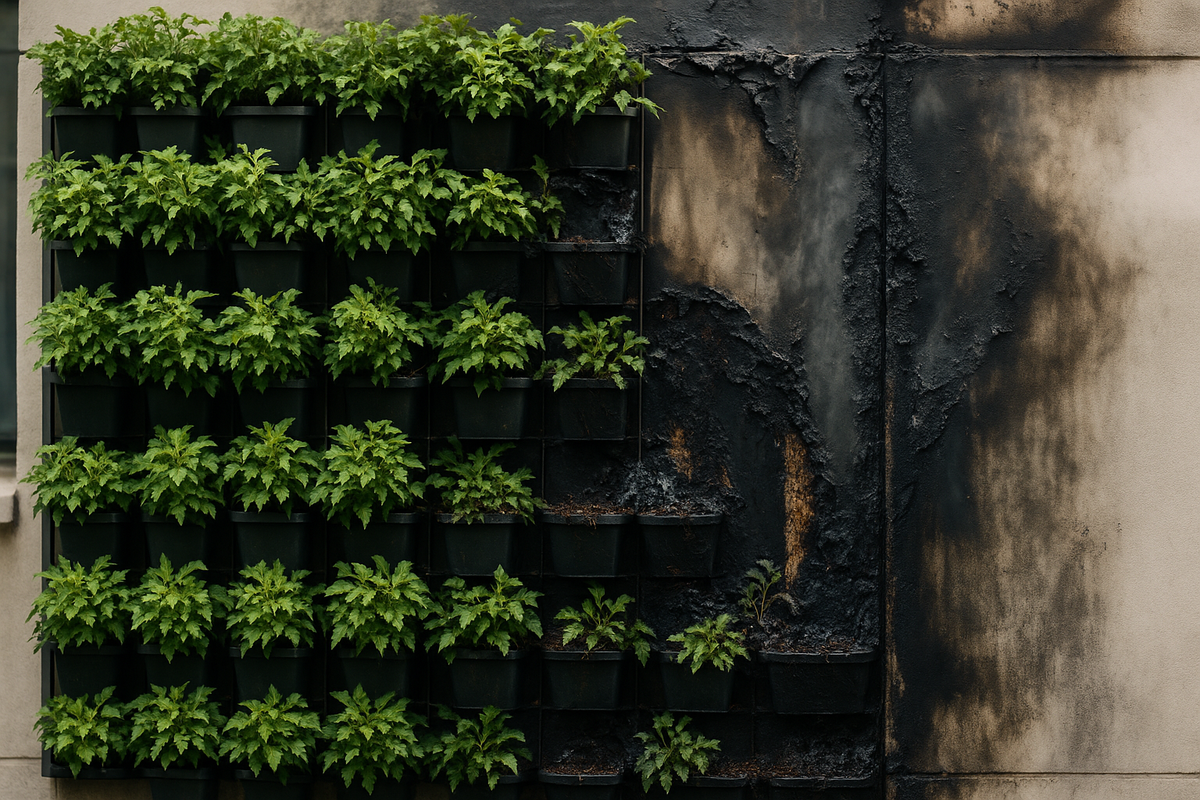
Green walls, increasingly popular for their aesthetic and environmental benefits, may pose significant fire risks due to the use of plastic in their potting systems. This startling revelation, shared exclusively with Dezeen, draws a parallel between these living walls and the combustible cladding implicated in the Grenfell Tower tragedy. As urban architects and developers continue to embrace sustainability, this finding urges a reevaluation of material choices in building design.
What Happened
Research indicates that the plastic pots used in green walls could pose a fire hazard similar to the cladding that contributed to the rapid spread of the Grenfell Tower fire in 2017. These vertical gardens, often installed on building facades to enhance aesthetics and promote sustainability, utilize plastic potting systems which may be highly flammable. This concern arises amidst the growing trend of integrating green infrastructure into urban environments, a move that has been widely embraced by architects and city planners aiming to reduce carbon footprints and improve air quality.
Why It Matters for the AECM Industry
For professionals in the architecture, engineering, and construction sectors, this revelation highlights a critical intersection of sustainability and safety. The use of combustible materials in building facades not only poses direct safety risks but also has significant implications for building codes and insurance premiums. As the industry moves towards greener practices, ensuring that these solutions do not inadvertently introduce new hazards is paramount. The potential fire risk associated with plastic-potted green walls could lead to increased scrutiny of materials used in construction projects, potentially impacting project timelines and costs. Additionally, this issue underscores the importance of ongoing research and innovation in developing safer, more sustainable building materials.
What's Next
In light of these findings, industry stakeholders may need to revisit existing green wall installations and consider alternative materials that offer both environmental benefits and fire safety. Upcoming changes to building codes and regulations could emerge as authorities respond to these safety concerns. AECM professionals should monitor developments closely, particularly any policy shifts or new guidelines from fire safety regulatory bodies. As this issue gains attention, collaboration between researchers, material scientists, and industry leaders will be crucial in advancing safer green building practices.
Is your firm ready for what’s next?
VisioneerIT helps AECM and government contractors modernize operations, achieve compliance, and implement AI.
Explore VisioneerIT Solutions →