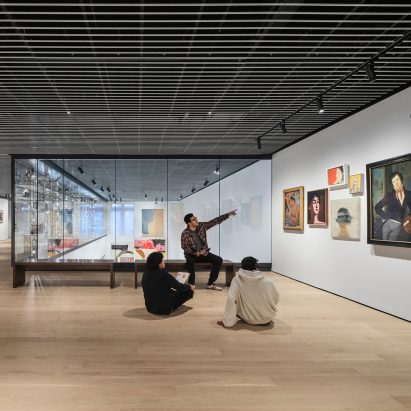
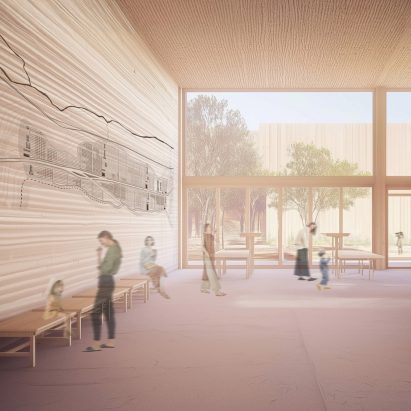
US architecture studio OPAL has unveiled a groundbreaking farming research and education center in Freeport, Maine, utilizing mass timber to combine traditional aesthetics with modern sustainability. The Smith Center for Education and Research, situated on the 500-acre Wolfe's Neck Center for Agriculture and the Environment, spans 8,800 square feet and serves as a model for eco-friendly design.
What Happened
OPAL, headquartered in Belfast, Maine, designed the Smith Center to be ecologically beneficial, aiming for the building to offset its entire embodied carbon debt throughout its lifetime. The structure draws inspiration from local barns, featuring a barn-like form crafted from mass timber. This choice not only reduces energy consumption but also sequesters carbon. The building employs a superinsulated, all-wood assembly complemented by climate-specific, triple-glazed curtain walls that optimize solar gain. The exterior is clad in white clapboard and unfinished cedar, offering a neutral palette that harmonizes with the surrounding agrarian landscape. Large, south-facing windows provide expansive views of the fields and ocean, enhancing the building's connection with its environment.
Why It Matters for the AECM Industry
The Smith Center exemplifies how traditional architectural forms can be adapted to meet contemporary sustainability standards. For the AECM industry, this project underscores the potential of mass timber as a viable alternative to conventional building materials, offering significant reductions in carbon footprint and energy use. The integration of superinsulation and strategic solar gain further demonstrates innovative approaches to energy efficiency. As the industry grapples with increasing demands for sustainable practices, projects like the Smith Center illustrate practical applications of eco-friendly design principles that do not compromise on aesthetic value.
What's Next
As the Smith Center begins operation, it will serve as a living lab for sustainable architecture and agricultural education. Industry professionals should monitor the center's performance metrics to assess the long-term viability of mass timber and superinsulation in similar projects. Additionally, the center's success could influence future building codes and sustainability standards, encouraging wider adoption of these practices across the industry.
Is your firm ready for what’s next?
VisioneerIT helps AECM and government contractors modernize operations, achieve compliance, and implement AI.
Explore VisioneerIT Solutions →