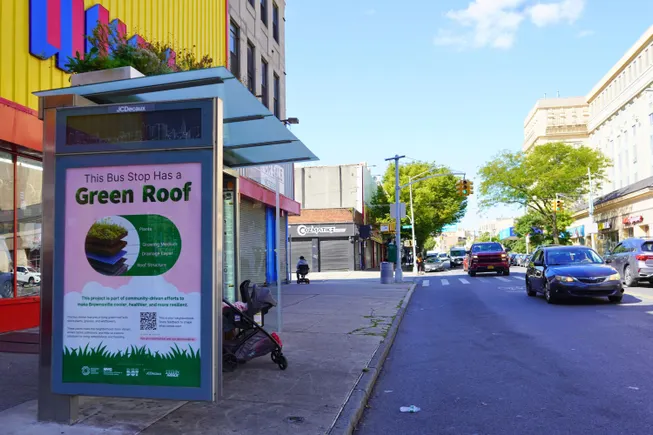
New York City is taking a proactive step in combating urban heat with the installation of innovative bus shelters in Brooklyn's Brownsville neighborhood. The city has introduced four shelters featuring heat-resilient roofs, including one with a living roof composed of native plants, grasses, and wildflowers, and three others with heat-reflecting film. This initiative aims to address the pressing issue of urban heat, which claims approximately 500 lives annually in New York City, according to the 2026 New York City Heat-Related Mortality Report.
What Happened
New York City's latest pilot project focuses on reducing ambient temperature in one of its most heat-vulnerable neighborhoods, Brownsville, Brooklyn. With support from the nonprofit Resilient Cities Catalyst, the city has installed innovative bus shelters as part of a broader strategy to enhance urban climate resilience. The project is a segment of the "Next Stop: Fast Buses, Better Service" plan championed by Mayor Zohran Mamdani and New York Governor Kathy Hochul. This plan not only seeks to improve bus service efficiency but also to incorporate climate adaptation measures such as these green roofs. Jean-Luc Martel, a construction engineering professor, has noted that living roofs can reduce surrounding temperatures by up to 20 degrees Fahrenheit, providing a substantial cooling effect in urban environments.
What This Means for Your Business
For AECM industry professionals, this pilot underscores the growing demand for sustainable construction solutions in urban planning. As cities increasingly prioritize climate adaptation, opportunities will arise in the design and installation of green infrastructure. Companies specializing in sustainable materials and construction techniques may find lucrative contracts as cities like New York seek to retrofit existing infrastructure and develop new projects focused on resilience. Furthermore, these projects align with federal and state initiatives aimed at reducing carbon footprints and enhancing urban livability, potentially unlocking additional funding and incentives.
What US Operators Should Watch
Industry professionals should monitor developments in urban climate resilience projects as they continue to gain traction across major cities. The pilot in Brooklyn could serve as a model for other municipalities facing similar heat challenges, leading to a broader adoption of green infrastructure solutions. Key dates to watch include New York City's ongoing rollout of the "Next Stop: Fast Buses, Better Service" plan, which may present further opportunities for public-private partnerships. Additionally, keeping an eye on federal funding announcements related to urban sustainability and infrastructure could provide insights into upcoming procurement opportunities.
Is your firm ready for what’s next?
VisioneerIT helps AECM and government contractors modernize operations, achieve compliance, and implement AI.
Explore VisioneerIT Solutions →