Nvidia Corp. has introduced the BlueField-4 STX reference architecture, a pivotal development poised to revolutionize storage systems for artificial intelligence (AI) clusters. Launched at the GTC developer event, this architecture promises to enhance AI-native infrastructure, a critical advancement for businesses navigating the evolving landscape of AI technology.
What Happened
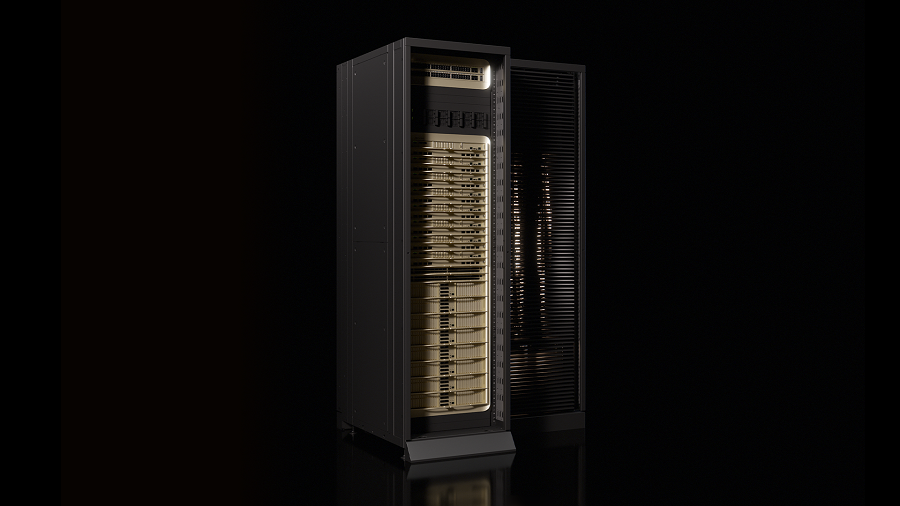
Nvidia's BlueField-4 STX architecture aims to provide a robust framework for hardware manufacturers to build advanced storage solutions tailored for AI clusters. At the heart of this architecture is the BlueField-4 data processing unit (DPU), which was first unveiled in January 2026. This DPU is designed to offload infrastructure management tasks from a server's main processor, thereby optimizing computing capacity for applications. Complementing the BlueField-4 DPU are Nvidia's Spectrum-X Ethernet switches and ConnectX-9 SuperNICs, which incorporate Remote Direct Memory Access (RDMA) technology to expedite data traffic flow between GPUs and flash storage, bypassing traditional CPU and operating system bottlenecks.
According to Nvidia, the BlueField-4 STX can process data tokens up to five times faster than previous storage architectures and offers a fourfold improvement in energy efficiency. The first implementation of this architecture is the CMX storage system design, optimized for handling key-value caches essential for large language models (LLMs). By storing these caches in high-speed flash storage, BlueField-4 chips enhance performance by offloading key data management tasks from the central CPUs of AI clusters.
What This Means for Your Business
For businesses in the architecture, engineering, construction, and manufacturing (AECM) sectors, the implications of Nvidia's BlueField-4 STX are significant. The enhanced processing capabilities and energy efficiency offer a competitive edge for companies operating AI workloads. The ability to process data faster and more efficiently can lead to improved project delivery timelines and reduced operational costs. Furthermore, as AI systems continue to integrate into various business processes, having a robust storage architecture becomes increasingly vital for maintaining peak performance.
Companies involved in federal contracts and government procurement should also be aware of the potential for integrating BlueField-4 STX into their AI infrastructure. This integration could align with compliance standards such as the Cybersecurity Maturity Model Certification (CMMC) and National Institute of Standards and Technology (NIST) guidelines, which emphasize the importance of secure and efficient data management.
What US Operators Should Watch
US operators should pay close attention to the projected timeline for the rollout of BlueField-4 STX systems, expected in the second half of 2026. Early adopters like Oracle Corp., Mistral AI SAS, and CoreWeave Inc. are already planning to leverage this technology, which could set a precedent for others in the industry. Additionally, companies should monitor developments in AI infrastructure and storage technologies, as these advancements may influence procurement strategies and compliance requirements.
As the AECM industry continues to evolve with the integration of AI, staying informed about cutting-edge technologies like Nvidia's BlueField-4 STX will be crucial for maintaining a competitive advantage and ensuring successful project outcomes.
Source: SiliconANGLE
Is your firm ready for what’s next?
VisioneerIT helps AECM and government contractors modernize operations, achieve compliance, and implement AI.
Explore VisioneerIT Solutions →