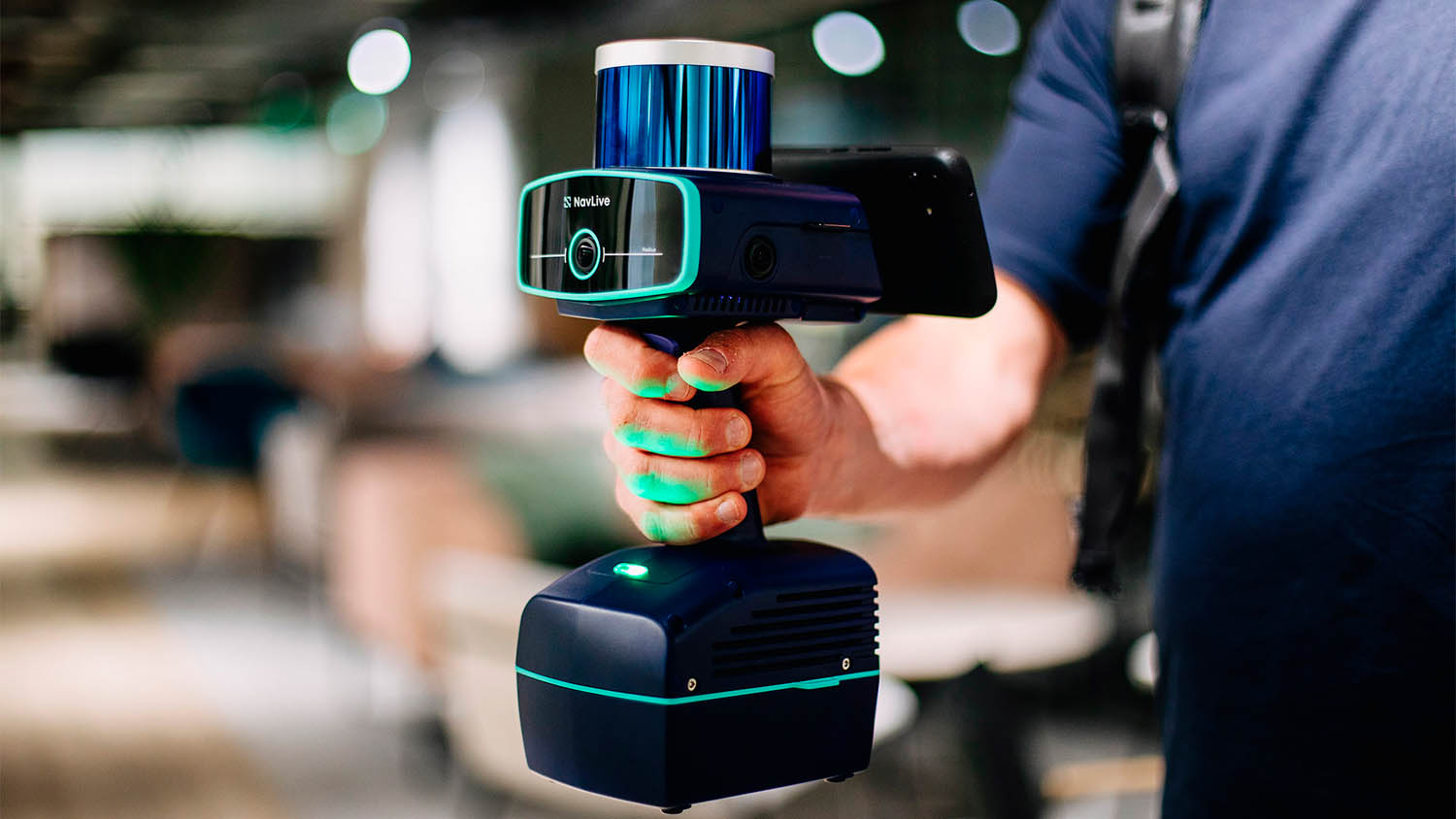
NavLive’s adoption of the Nvidia Jetson Orin system-on-module marks a significant leap in construction scanning technology, enabling more efficient and precise data capture on-site. This development is pivotal for the AECM industry, as it underscores a shift towards more integrated and scalable solutions in real-time construction monitoring.
What Happened
NavLive has integrated Nvidia's Jetson Orin into its latest handheld construction scanner, allowing for advanced real-time processing capabilities. The device features a suite of five sensors, including three cameras, LiDAR, and an Inertial Measurement Unit (IMU), which all stream data simultaneously. This integration supports simultaneous localization and mapping (SLAM) and object detection, streamlining tasks previously managed by separate microcontrollers. The Nvidia Jetson Orin combines a CPU, GPU, and deep learning accelerators into one module, reducing the scanner’s weight and power requirements while boosting its performance.
Why It Matters for the AECM Industry
This technological advancement is crucial for the AECM industry as it offers a more compact and efficient solution for real-time data processing on construction sites. The improved scanner enhances the ability to detect and map building features such as windows and doors, which can significantly impact project timelines and accuracy. Furthermore, the inclusion of AI-driven capabilities like anonymization features ensures compliance with privacy regulations, a growing concern in data-intensive environments. The reduction in hardware complexity and power consumption can translate to lower operational costs and increased portability, making these devices more accessible to a broader range of projects and companies.
What's Next
The introduction of Nvidia’s technology into NavLive’s scanners sets a precedent for future advancements in construction technology. As the industry continues to embrace AI and machine learning, we can anticipate further innovations that enhance data capture and processing capabilities. Professionals in the AECM industry should watch for developments in AI-driven tools that offer increased scalability and adaptability, potentially transforming construction site operations and improving overall project efficiencies.
Is your firm ready for what’s next?
VisioneerIT helps AECM and government contractors modernize operations, achieve compliance, and implement AI.
Explore VisioneerIT Solutions →