The introduction of the SingNova-H Studio marks a significant leap in AI technology as Nanyang Singtech unveils the first RISC-V dataflow architecture AI PC. This advancement comes at a critical time for industries reliant on powerful, localized AI computing solutions.
What Happened
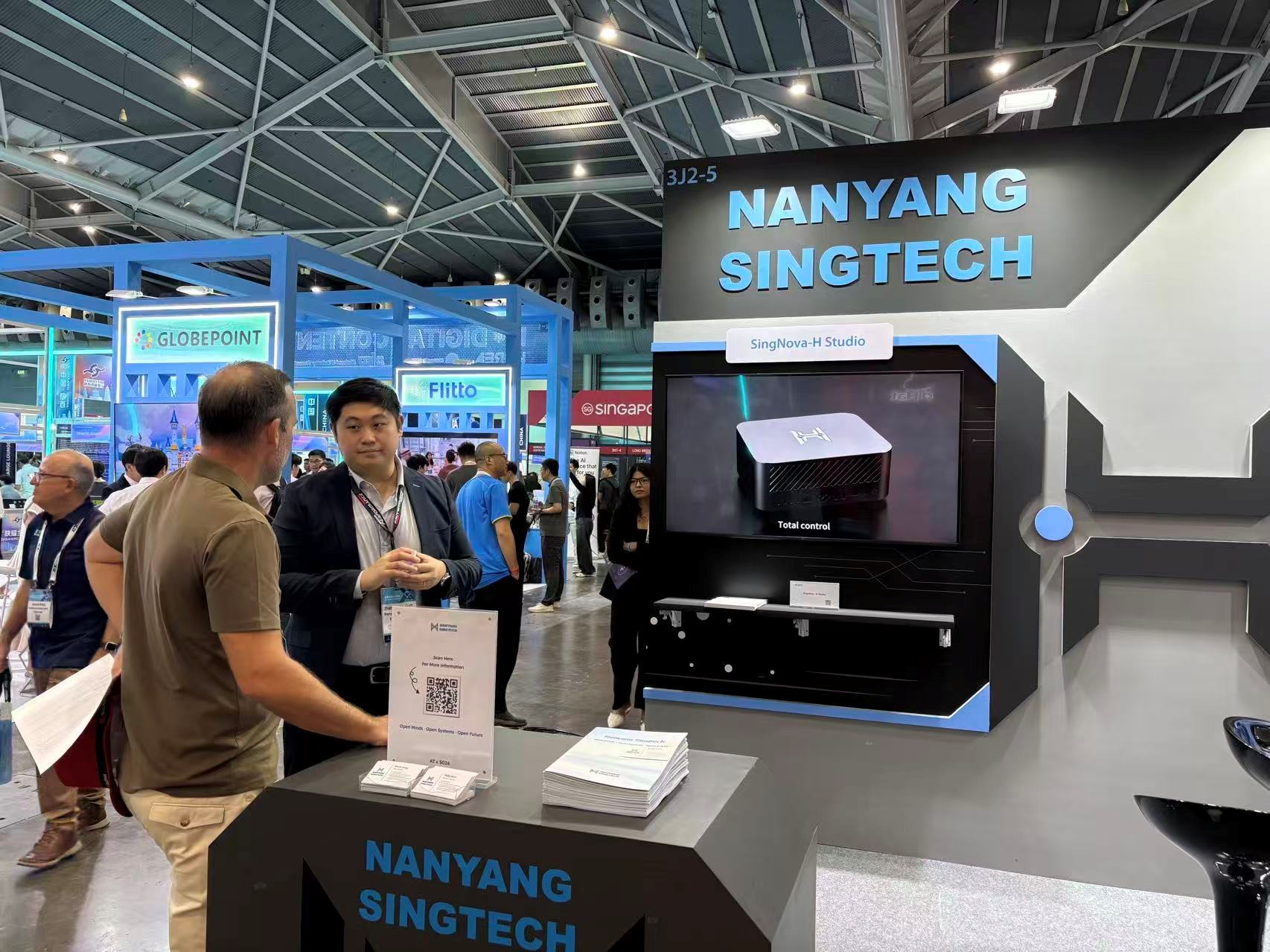
At the ATxSG technology exhibition in Singapore, Nanyang Singtech, a company incubated by Nanyang Technological University, presented its groundbreaking SingNova-H Studio. This AI PC is equipped with a RISC-V dataflow architecture system-on-chip, designed to address the increasing need for local AI computation, privacy, and cost-efficiency in AI inference. The SingNova-H Studio is equipped with 128 GB of unified memory and offers 200 Tera Operations Per Second (TOPS) of computing power, allowing for the running of large language models of up to 70 billion parameters entirely on the device.
Traditional architectures often face the "memory wall"—a bottleneck caused by frequent data shuttling between memory and processors. The SingNova-H Studio bypasses this with its optimized RISC-V dataflow architecture, facilitating high-concurrency and low-latency processing. It features a 12-core RISC-V CPU at 2.0 GHz and an AI accelerator capable of delivering 200 TOPS (INT8) and 32 TFLOPS (FP16), supporting real-time AI workloads without relying on cloud infrastructure.
Why It Matters for the AECM Industry
The SingNova-H Studio's ability to process large AI models locally without data leaving the premises addresses several critical concerns for the AECM industry, including data privacy, security, and cost. By eliminating cloud dependency, firms can reduce network latency and inference costs, making AI deployment more financially sustainable. The 128 GB memory capacity supports memory-intensive applications common in engineering and construction, such as real-time video analytics for smart city projects or complex simulations in architectural design.
Furthermore, the device's compact design and efficient power consumption—ranging from 10 W to 75 W—allow for deployment in diverse environments without significant infrastructure changes. The inclusion of a mature software ecosystem compatible with major AI frameworks also reduces the development barrier, enabling AECM professionals to innovate rapidly and efficiently.
What's Next
Is your firm ready for what’s next?
VisioneerIT helps AECM and government contractors modernize operations, achieve compliance, and implement AI.
Explore VisioneerIT Solutions →