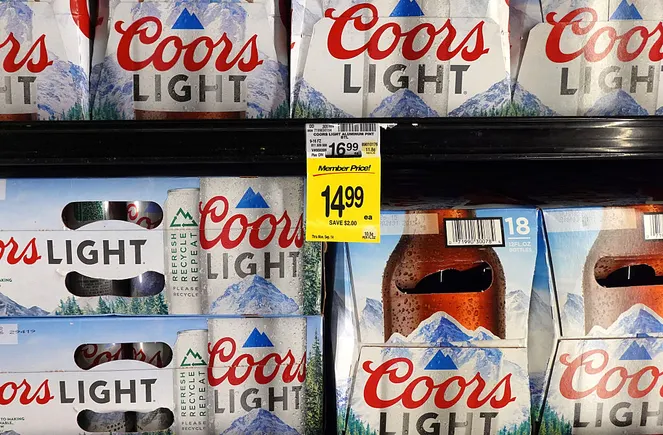
Beverage giants Molson Coors and Primo Brands are implementing fuel hedging strategies to mitigate escalating logistics costs fueled by the ongoing Iran war. This strategic move, highlighted in their Q3 earnings calls, reflects a broader industry push to navigate volatile fuel prices and a constrained freight market.
What Happened
Fuel hedging has emerged as a critical tool for Molson Coors and Primo Brands to manage the unpredictable swings in transportation costs. Molson Coors, the owner of the Coors Light brand, reported an 8.1% increase in the cost of goods sold per hectoliter, driven largely by rising fuel prices, aluminum costs, and a tightening freight market. CFO Tracey Joubert noted that despite long-term transportation contracts, the company has increasingly turned to the spot market due to tighter capacity, leading to higher rates.
Primo Brands, which manages labels such as Pure Life and Arrowhead, has also ramped up its diesel hedging activities for 2027 to levels comparable to 2026. Although these efforts do not completely shield them from cost pressures, they provide a buffer against the volatility of market prices. The company’s leadership emphasized that while hedging incurs additional costs, the predictability it offers is valuable in a volatile environment, especially with U.S. on-highway diesel prices hitting $5.70, up $1.86 year-over-year.
What This Means for Your Business
For businesses in the AECM sector, the move by these industry leaders signals the importance of adopting sophisticated risk management strategies in the face of economic uncertainty. Fuel hedging, while not universally adopted due to its complexity and costs, offers a pathway to price stability. Companies may need to weigh the benefits of price certainty against the operational costs of implementing such strategies.
Additionally, the tightening freight market, exacerbated by regulatory pressures and a shortage of drivers, poses challenges for logistics planning and cost management. Businesses should consider diversifying their procurement strategies, possibly incorporating elements like hedging or longer-term contracts, to mitigate exposure to spot market volatility.
What US Operators Should Watch
Decision-makers should closely monitor fuel price trends and regulatory changes affecting freight capacity. The current landscape suggests a need for proactive engagement with fuel hedging and other risk management tools. As the geopolitical situation evolves, keeping a vigilant eye on global events that could impact commodity prices will be crucial. Companies should also prepare for potential cost pass-throughs via delivery fees and surcharges as part of their pricing strategies.
Source: Supply Chain Dive. Read the original story ->
Is your firm ready for what’s next?
VisioneerIT helps AECM and government contractors modernize operations, achieve compliance, and implement AI.
Explore VisioneerIT Solutions →