Carbon capture, usage, and storage (CCUS) is increasingly pivotal to the UK's decarbonization strategy, targeting both energy sectors and challenging materials like cement and concrete. Despite its critical role, CCUS faces skepticism, but Mitsubishi Heavy Industries' Head of CCUS for EMEA, John Picken, stands firm on its efficacy and readiness.
What Happened
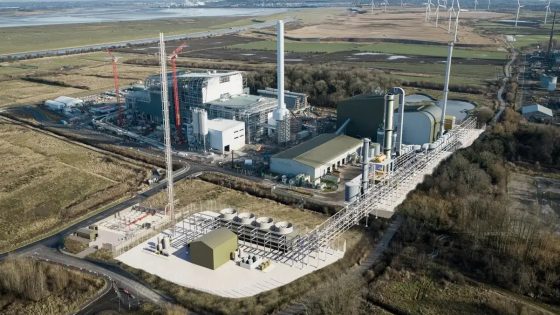
Mitsubishi Heavy Industries (MHI) is at the forefront of implementing CCUS technologies worldwide, with 18 operational plants, including the world’s largest in the United States, capturing approximately 5,000 tons of carbon daily. MHI emphasizes the proven nature of CCUS, countering criticisms and perceived risks highlighted in a 2025 Public Accounts Committee report. The report suggested that the UK’s reliance on first-of-its-kind technologies for net-zero goals was risky. Picken refutes this, citing decades of successful carbon capture and storage operations, such as those by Equinor in the North Sea’s Sleipner field.
Picken acknowledges construction risk as a potential challenge but expresses confidence in the UK's capabilities. He stresses the importance of early and effective collaboration among stakeholders to ensure project success. MHI continues to innovate, particularly in solvent technology, introducing KS-21 to enhance thermodynamic performance and reduce corrosion, promising improvements in both capital and operational expenditures.
Why It Matters for the AECM Industry
For the architecture, engineering, construction, and manufacturing (AECM) sectors, the successful deployment of CCUS technologies can significantly impact project costs, timelines, and regulatory compliance. CCUS offers a pathway to meet stringent emissions targets while maintaining the viability of industries reliant on carbon-intensive materials. The introduction of improved solvents like KS-21 highlights a commitment to reducing operational costs and enhancing system efficiency, directly benefiting project stakeholders. Moreover, the integration of heat pumps from MHI’s sister company, Turboden, showcases innovative approaches to optimize energy use, further reducing parasitic loads.
What's Next
As the UK progresses towards its decarbonization goals, AECM professionals should monitor CCUS advancements, particularly the deployment of new technologies like KS-21 and heat pump integrations. The collaboration between industry players and government bodies will be crucial in navigating construction risks and ensuring the success of CCUS projects. Upcoming policy developments and project milestones will provide further opportunities
Is your firm ready for what’s next?
VisioneerIT helps AECM and government contractors modernize operations, achieve compliance, and implement AI.
Explore VisioneerIT Solutions →