Maersk Tankers has taken a significant step forward in its sustainability journey by expanding its use of automated wind-assisted propulsion systems. This move is part of a broader industry trend toward integrating hybrid automation and renewable energy technologies to cut fuel consumption and emissions.
What Happened
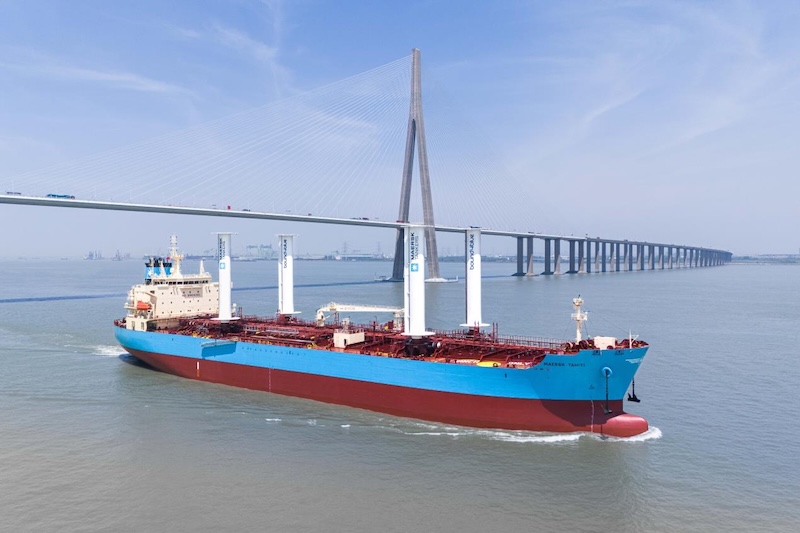
Maersk Tankers recently completed the installation of four 24-meter automated suction sails on the Maersk Tahiti at Chengxi Shipyard in Jiangyin, China. These sails, supplied by Spanish wind propulsion specialist bound4blue, are part of an agreement to install a total of 20 suction sails across five vessels in the Maersk Tankers fleet. This project follows the first installation on Maersk Trieste earlier this year. The eSAIL systems by bound4blue are designed to autonomously generate additional propulsion through suction-based aerodynamic control, significantly reducing the engine load and thereby improving fuel efficiency and lowering CO₂ emissions.
Why It Matters for the AECM Industry
The integration of such advanced wind propulsion technologies aligns with the global push for sustainable engineering and construction practices. For the AECM sector, these developments could influence design and manufacturing processes, particularly in the realm of retrofitting existing vessels and designing new builds. As the shipping industry seeks to comply with increasingly strict international maritime emissions regulations, such as the FuelEU Maritime regulations and the EU Emissions Trading System, the demand for innovative propulsion technologies is likely to rise. This could lead to new business opportunities and collaborations for AECM professionals focused on automation and sustainability.
What's Next
As bound4blue continues to expand its manufacturing and operational presence in Asia, more installations are expected, with additional projects currently in development. The company has already installed its systems on 11 vessels since its first commercial deployment in 2021, with a growing customer base that includes prominent shipping groups. AECM professionals should watch for further advancements in automated propulsion technologies and potential impacts on design and manufacturing standards.
Partner Insight · VisioneerIT
The adoption of automated wind propulsion technologies by Maersk Tankers highlights the growing need for digital modernization in the maritime industry. VisioneerIT specializes in engineering enterprise-grade software solutions that can support such innovative technologies and streamline operations.
Explore VisioneerIT Cybersecurity →
Is your firm ready for what’s next?
VisioneerIT helps AECM and government contractors modernize operations, achieve compliance, and implement AI.
Explore VisioneerIT Solutions →