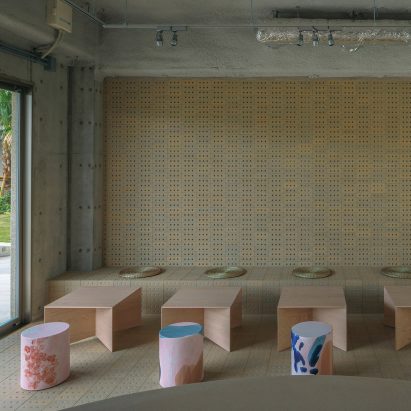
Mint-green metal signals the transformation of this former industrial shed in the Czech Republic into Šmeral Art Factory, a project spearheaded by local architecture studio KOGAA. This innovative redevelopment is situated within the still-operating Šmeral machinery factories in Brno, marking the first phase of a broader initiative to rejuvenate industrial spaces for cultural use.
What Happened
KOGAA's transformation of an industrial hall into the Šmeral Art Factory is a significant move in the adaptive reuse landscape, showcasing how industrial heritage can be preserved and repurposed for modern needs. The project is nestled within the operational complex of Šmeral machinery factories, emphasizing the duality of preserving industrial activity while fostering cultural and artistic endeavors. The intervention by KOGAA is the inaugural step in a larger strategy to breathe new life into industrial zones across the region, with the intent to attract both local and international visitors and artists.
What This Means for Your Business
For AECM industry professionals, KOGAA’s project underscores the potential of adaptive reuse as a profitable and sustainable business model. Repurposing industrial spaces not only preserves historical architecture but also opens up new avenues for revenue through cultural tourism and events. Such projects can be pivotal in securing government and private funding, given the increasing emphasis on sustainability and cultural preservation. This transformation highlights the importance of strategic partnerships between industrial operators and architects, ensuring that spaces can be dual-purposed to support both production and cultural activities, thus maximizing ROI.
What US Operators Should Watch
Industry professionals should monitor the progression of similar adaptive reuse projects, particularly those that align with federal and state sustainability goals. With growing interest in preserving industrial heritage, opportunities for funding and incentives are likely to increase. Keeping an eye on the timelines and outcomes of projects like the Šmeral Art Factory could provide valuable insights into best practices and potential pitfalls. Additionally, understanding the regulatory environment for such transformations, including zoning laws and historic preservation requirements, will be crucial for US operators looking to replicate this model.
Source: https://www.dezeen.com/2026/09/01/kogaa-smeral-art-factory/. Read the original story ->
Is your firm ready for what’s next?
VisioneerIT helps AECM and government contractors modernize operations, achieve compliance, and implement AI.
Explore VisioneerIT Solutions →