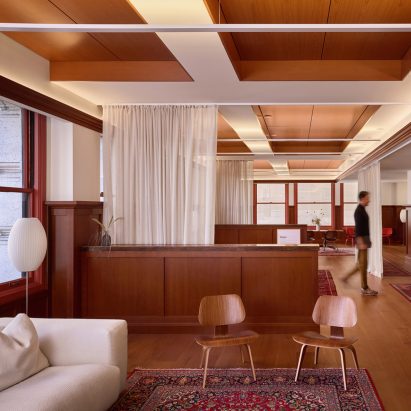
Local studio Interior Architects has ushered a blend of old-world charm and modern minimalism into the heart of San Francisco by designing a Craftsman-style headquarters for the AI company Notion. This architectural feat, set within the 1907 Monadnock Building, underscores the marriage of traditional craftsmanship with cutting-edge technology, a trend gaining traction in the architectural realm.
What Happened
Interior Architects (IA) undertook the ambitious project of redesigning five floors of the historic Monadnock Building, a cornerstone of downtown San Francisco, to create a new headquarters for Notion, an AI company currently valued at $11 billion. The design incorporates classic Craftsman-style detailing, known for its emphasis on handcrafted woodwork and natural materials, along with a minimalist aesthetic that aligns with the technological focus of Notion. This approach not only respects the architectural heritage of the building but also adapts it to meet the needs of a modern tech company.
The Monadnock Building, constructed in 1907, presents a unique juxtaposition of old and new. The choice of this location reflects a growing trend among tech companies to embed their operations within historically significant structures, creating spaces that resonate with both innovation and tradition. This project by IA is a testament to the adaptive reuse of historical architecture, ensuring that these iconic buildings continue to serve functional purposes while preserving their historical significance.
What This Means for Your Business
For architecture, engineering, and construction (AEC) professionals, this project highlights the increasing demand for creative solutions that blend historical preservation with modern functionality. As tech companies like Notion seek spaces that reflect their innovative spirit, opportunities are ripe for firms that can navigate the complexities of designing within historic frameworks.
AEC firms should consider the potential of historical buildings as prime real estate for tech industry clients. These projects often require a nuanced understanding of both regulatory compliance and innovative design, offering lucrative contracts for those equipped to handle such challenges. Furthermore, the emphasis on sustainability and adaptive reuse aligns with broader industry trends toward environmentally responsible practices.
What US Operators Should Watch
AEC professionals should keep an eye on the growing trend of tech companies investing in historic properties across major urban centers. The potential for federal and local tax incentives for preservation projects can make these endeavors financially attractive. Additionally, staying abreast of technological advancements in building materials and sustainable practices will be crucial in meeting the demands of such projects.
As the demand for these hybrid spaces grows, procurement windows for relevant projects are expected to open, offering significant opportunities for firms ready to adapt to this evolving landscape. The intersection of historical preservation and modern innovation will likely continue to shape the competitive positioning of firms in the AEC industry.
Source: Dezeen
Is your firm ready for what’s next?
VisioneerIT helps AECM and government contractors modernize operations, achieve compliance, and implement AI.
Explore VisioneerIT Solutions →