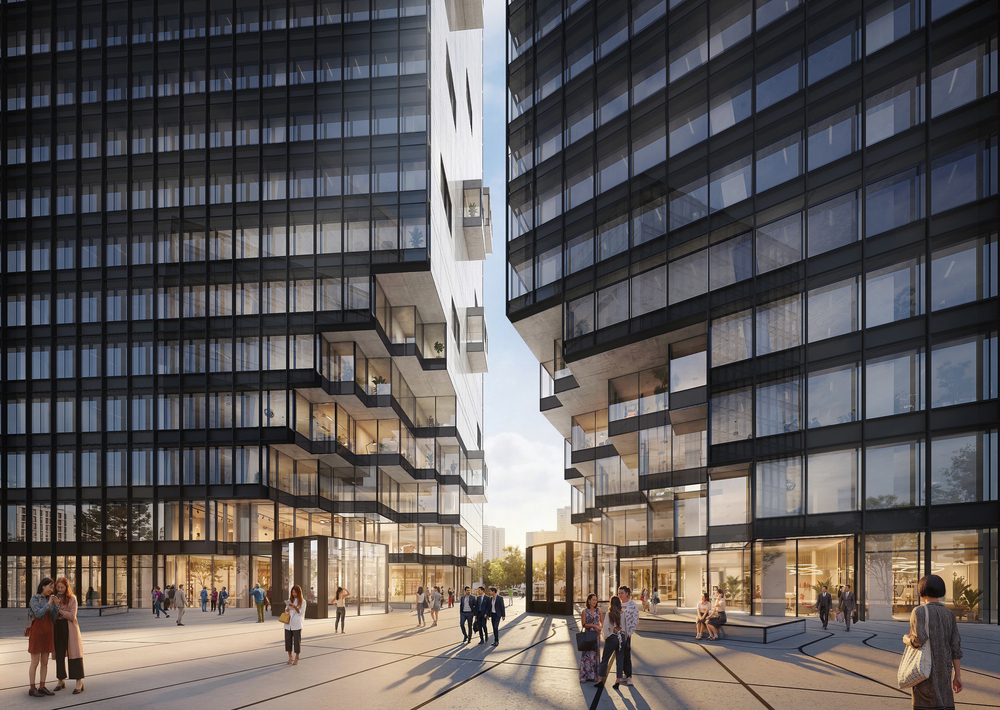
Dutch architectural studio MVRDV has introduced the Nangang Pair, a striking architectural project in Taipei, Taiwan, featuring two office towers designed to form a gateway to the city's Nangang district. This ambitious project, unveiled on June 18, 2026, aims to blend innovative design with functionality, acting as a symbolic entrance to a burgeoning technology and finance hub.
What Happened
MVRDV's design for the Nangang Pair involves two interconnected office towers that appear as one structure split in two. The architectural concept emphasizes a visually striking gap between the buildings, creating an inviting entrance to a public plaza. This design choice, described by MVRDV founder Winy Maas as a "literal gesture of opening," seeks to integrate the urban environment by encouraging the flow of the city through the towers rather than obstructing it. The development, spearheaded by Jut Group, strategically connects Kunyang Station and offers picturesque views toward Hsin Hsin Park.
The architectural features of the towers include protruding balconies that create a dynamic visual effect, with corresponding indentations on the opposite volume. The outer facades boast a jutting glass curtain wall, while the inner faces are finished with a smooth veneer, underscoring the break in massing. The ground floor is designated for lobbies, retail spaces, cafes, and restaurants, enhancing the site’s commercial appeal. Additionally, the third floor accommodates communal services for tenants, and the rooftop hosts a garden equipped with rainwater harvesting systems and solar panels, promoting sustainability.
What This Means for Your Business
For US-based AECM professionals, the Nangang Pair project highlights the growing trend of integrating sustainable design within urban infrastructure. The inclusion of rainwater harvesting and solar panels aligns with increasing global demand for eco-friendly construction practices. This project also underscores the importance of innovative architectural solutions that harmonize with urban landscapes, presenting a potential competitive edge for firms embracing such forward-thinking designs.
Moreover, the strategic location linking key transit points and offering aesthetic urban integration can serve as a model for similar developments in high-density urban areas in the US. Firms involved in federal contracts and urban development projects may find inspiration in MVRDV's approach, potentially influencing future bids and design proposals.
What US Operators Should Watch
US operators should monitor upcoming trends in sustainable urban design and consider how elements like rainwater harvesting and solar integration can be incorporated into future projects. Additionally, keeping an eye on international design innovations can provide insights into competitive positioning and enhance project proposals when bidding for federal or state contracts. As urban centers continue to evolve, the demand for projects that marry aesthetic appeal with functional, sustainable design will likely grow, influencing procurement criteria and competitive landscapes.
Source: https://www.globalconstructionreview.com/crumbling-towers-in-taipei-to-form-new-district-gateway/. Read the original story ->
Is your firm ready for what’s next?
VisioneerIT helps AECM and government contractors modernize operations, achieve compliance, and implement AI.
Explore VisioneerIT Solutions →Tracking the right federal opportunities?
OryonIQ's AI platform monitors agency forecasts, contract awards, and procurement timelines — so government contractors always know what’s coming next.
Try OryonIQ Free →