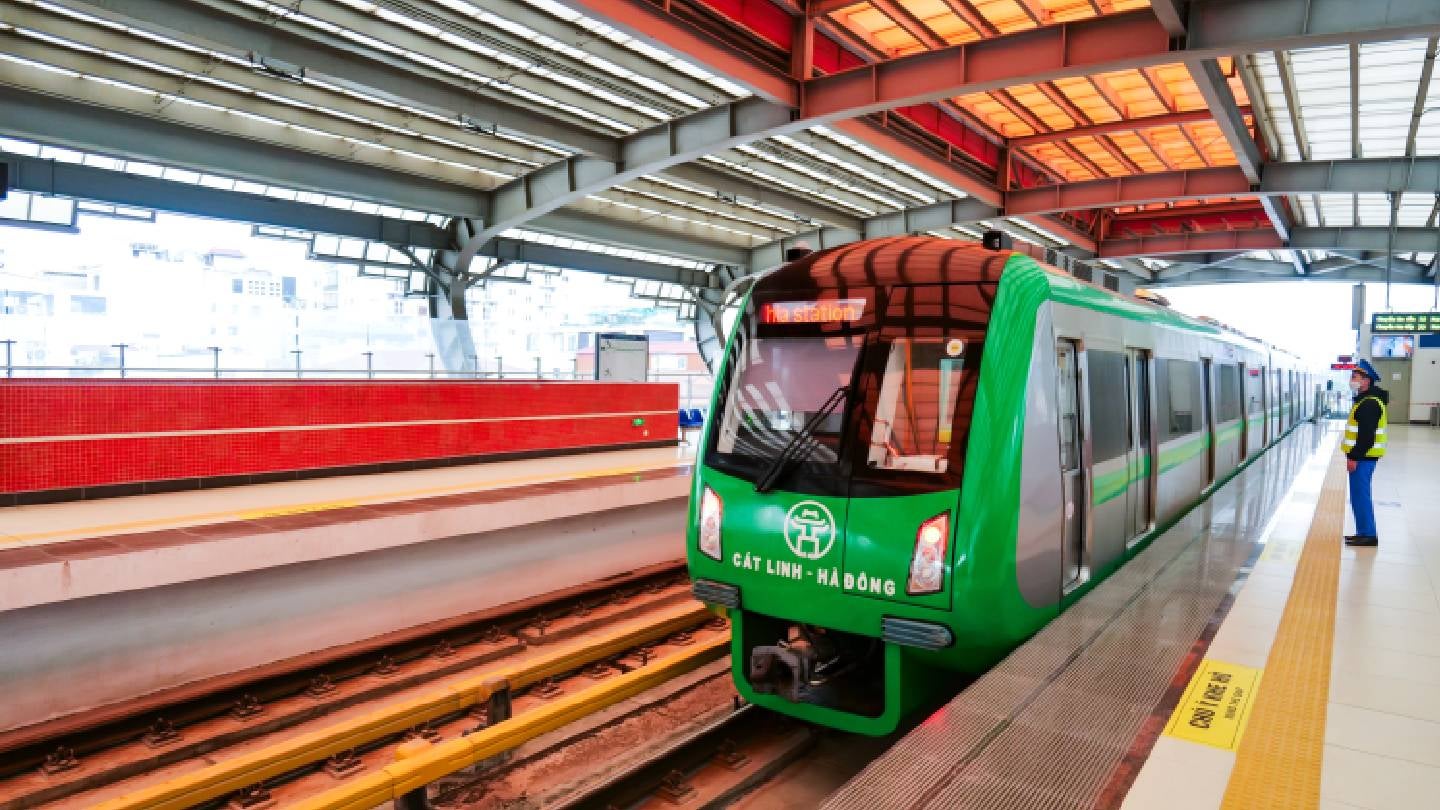
Hanoi has embarked on an ambitious journey to transform its urban landscape with the construction of five new urban railway projects, collectively valued at $49.4 billion. This groundbreaking initiative, formalized by the Hanoi People’s Committee on June 17, 2023, under Notice No. 523, is set to reshape public transportation and stimulate economic growth through transit-oriented development (TOD).
What Happened
Hanoi's investment in these railway projects aims to alleviate chronic traffic congestion and support the city's sustainable urban development strategy. The projects will expand the city's public transportation network significantly, with the most extensive of these, Metro Line No. 8, stretching approximately 91 kilometers and requiring over VND437 trillion in funding. This line will connect Hanoi with neighboring provinces, including Hung Yen and Bac Ninh, making it a crucial component of the region's transportation infrastructure.
Other significant projects include Metro Line No. 1, estimated to require nearly VND390 trillion, which will offer an 81-kilometer underground route connecting key locations such as Hung Vuong Stadium and Noi Bai Airport. Metro Line No. 2, covering 56.5 kilometers, is budgeted at more than VND271.7 trillion and will run from Noi Bai Airport to Hung Vuong Stadium. Metro Line No. 10 and Metro Line No. 14 are also integral to this expansion, with projected costs of over VND206.7 trillion and VND154 trillion, respectively.
The comprehensive plan involves constructing significant segments of these metro lines underground and embedding them within Hanoi's TOD framework. The city targets completion of the network by 2030, with ongoing refinement of project planning, appraisal, and investment estimates.
What This Means for Your Business
For U.S. AECM firms and government contractors, this development presents substantial opportunities in international markets. Companies with expertise in urban rail systems, underground construction, and sustainable urban planning stand to benefit. The scale of investment and the technical demands of these projects necessitate advanced solutions, offering potential contracts in engineering design, project management, and technology implementation.
Moreover, firms should consider the competitive advantage of aligning their offerings with Hanoi's TOD objectives. Providing integrated solutions that support high-capacity transit systems could enhance competitive positioning and ROI. Additionally, the projects may offer collaborative prospects with Vietnamese companies, opening avenues for technology transfer and joint ventures.
What US Operators Should Watch
U.S. companies interested in participating should monitor updates on project planning and procurement timelines, as Hanoi refines its investment estimates and project appraisals. Staying abreast of federal deadlines and procurement windows is crucial, as these will dictate opportunities for bidding on contracts. Furthermore, understanding compliance requirements specific to Vietnam's regulatory environment will be essential for successful market entry and project execution.
Source: https://www.worldconstructionnetwork.com/news/hanoi-urban-railway-projects-construction/. Read the original story ->
Is your firm ready for what’s next?
VisioneerIT helps AECM and government contractors modernize operations, achieve compliance, and implement AI.
Explore VisioneerIT Solutions →