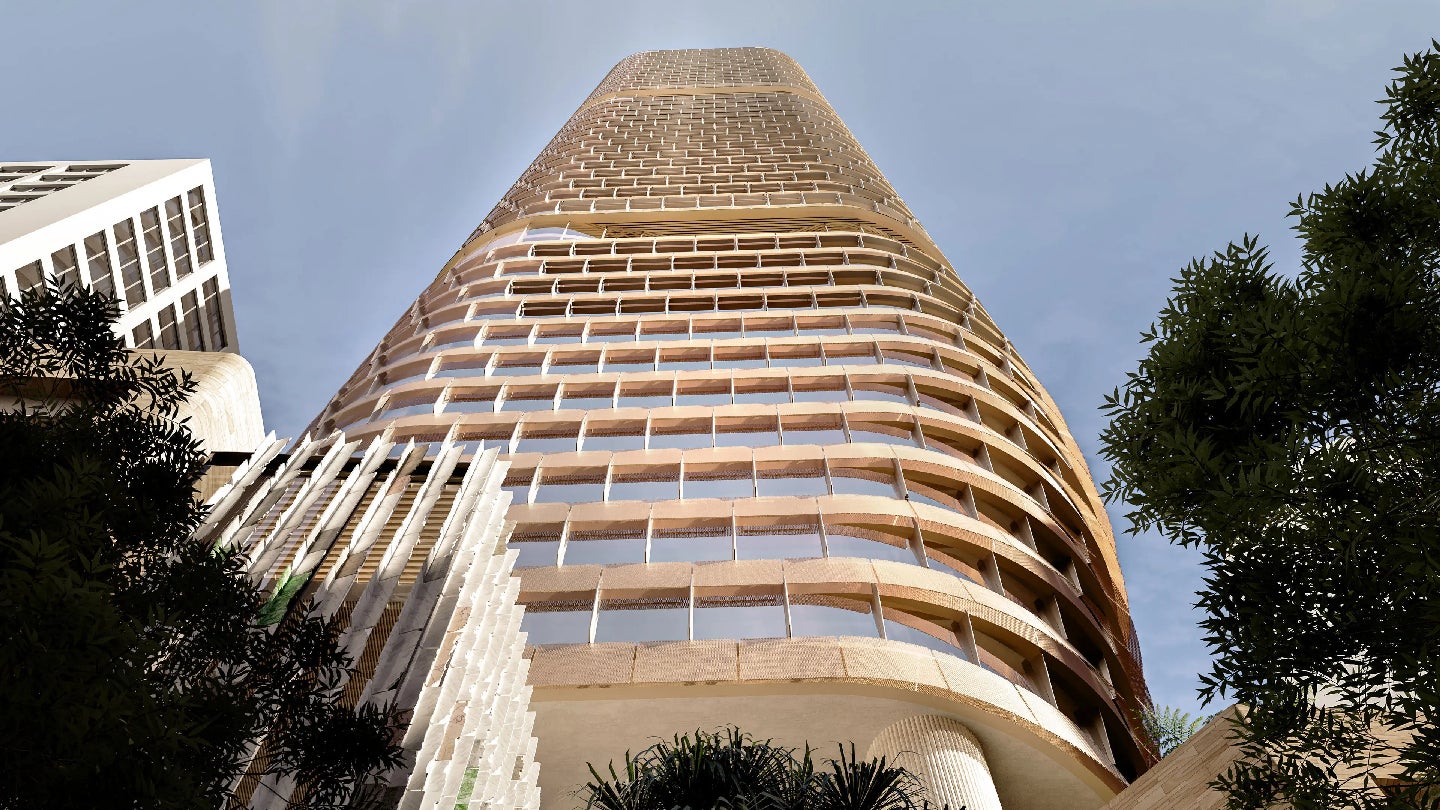
The groundbreaking of the $1.2 billion Halo tower in Sydney marks the beginning of a transformative commercial development in the city's central business district. This project, a joint venture between Milligan Group and Cbus Property, is set to redefine Sydney's skyline and deliver a state-of-the-art office environment in a market with limited new premium office supply.
What Happened
Early construction activities have commenced on the Halo tower, a 55-storey commercial office building located at the intersection of Hunter and Pitt Streets in Sydney. This development is strategically positioned above the future Hunter Street metro station, set to become a major transport hub by 2032. The project is notable for its innovative design elements, including a hybrid timber structure and a solar skin façade that aims to meet up to 15% of the building's energy needs. Multiplex, appointed as the builder, is leveraging its extensive experience and previous collaborations with Cbus Property to deliver this complex project. The development will incorporate adaptable office spaces, integrated hospitality, new pedestrian pathways, and direct connections to Sydney's expanding Metro network.
What This Means for Your Business
For US-based AECM firms and government contractors, the Halo project exemplifies the growing trend towards integrating sustainability with urban infrastructure. This development highlights the opportunities in hybrid construction methods and renewable energy integration, areas that are increasingly becoming focal points in global tenders and contracts. As the demand for sustainable office spaces grows, understanding the innovations applied in projects like Halo can inform competitive strategies and procurement decisions. In addition, the involvement of established entities such as Multiplex underscores the importance of strategic partnerships in executing large-scale projects, a model that could be replicated in US markets.
What US Operators Should Watch
Operators should monitor the progress of the Halo project for insights into the implementation of hybrid structural systems and renewable energy solutions. Additionally, the opening of the Hunter Street metro station by 2032 will serve as a case study in integrating transport infrastructure with commercial developments. This timeline aligns with increasing federal interest in sustainable urban projects, which could translate into new funding opportunities and regulatory frameworks in the US. Keeping abreast of these developments will be crucial for positioning in future government contract bids.
Source: World Construction Network. Read the original story ->
Is your firm ready for what’s next?
VisioneerIT helps AECM and government contractors modernize operations, achieve compliance, and implement AI.
Explore VisioneerIT Solutions →