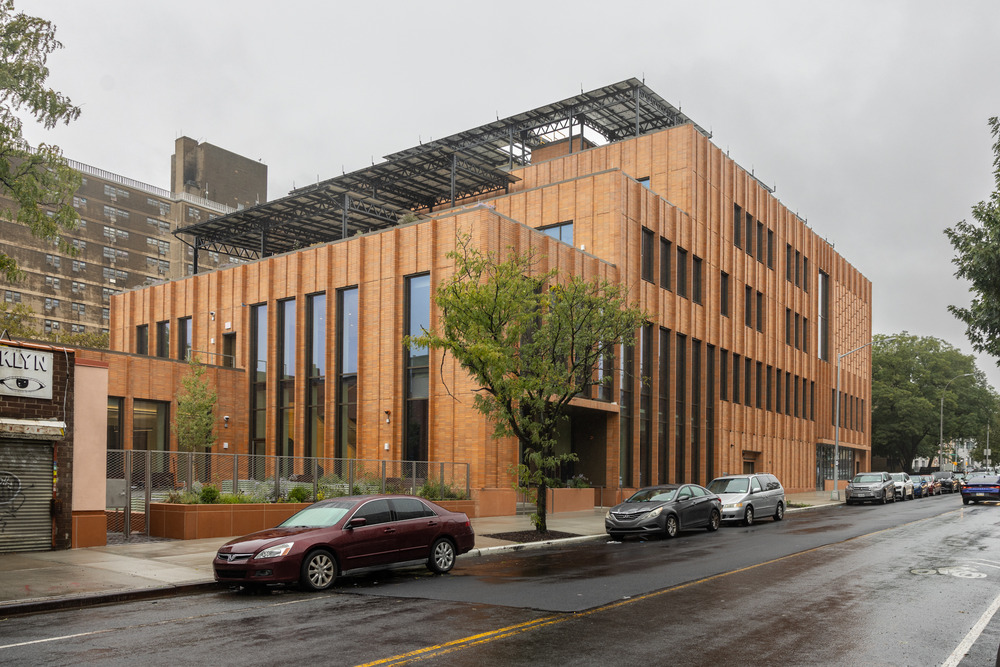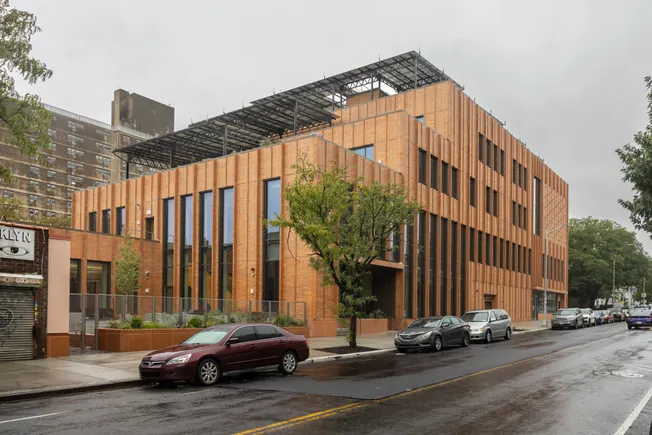
The $128 million Brownsville Multi-Service Center in Brooklyn, New York, stands as a testament to the efficiency of the design-build method, having been completed $10 million under budget and two years ahead of schedule. This project not only showcases the potential for cost and time savings in large-scale urban construction but also aligns with New York City's stringent climate resilience standards.
What Happened
Gilbane Building Co. and architecture firm Marvel successfully completed the Brownsville Multi-Service Center, a four-story, 60,000-square-foot facility. The center, designed to host various community organizations, features 10 office spaces, combinable conference rooms, a commercial kitchen, a community garden, and public artwork. The building is all-electric and incorporates solar panels across three floors, aiming for LEED Gold certification. This project highlights the design-build delivery method, where early collaboration between architects and builders helps to streamline decision-making and align construction timelines efficiently. The project utilized a two-step procurement process that allowed Gilbane to begin work on the demolition of the previous structure while finalizing the new building’s design, a strategy that significantly cut down on both time and costs.
What This Means for Your Business
The success of the Brownsville Multi-Service Center underscores the advantages of the design-build approach, making it an attractive option for contractors and developers aiming to minimize risk and maximize efficiency. For firms in the architecture, engineering, construction, and manufacturing (AECM) sectors, this project sets a precedent for integrating sustainable practices with innovative building techniques. The emphasis on clean construction, as mandated by New York City's Executive Order 23, highlights the growing importance of sustainability in public projects. This shift not only opens up new opportunities for firms specializing in green technologies but also signals a competitive edge for companies that can deliver on these standards.
What US Operators Should Watch
AECM professionals should closely monitor the implementation of clean construction practices across major urban areas, as cities increasingly adopt policies similar to New York's Executive Order 23. The trend towards sustainable building methods and the use of design-build contracts is likely to expand, offering significant opportunities for federal funding and partnership in future projects. Additionally, firms should prepare for potential changes in procurement processes that favor more efficient and collaborative delivery methods, which could influence contract bidding and project management strategies.
Is your firm ready for what’s next?
VisioneerIT helps AECM and government contractors modernize operations, achieve compliance, and implement AI.
Explore VisioneerIT Solutions →