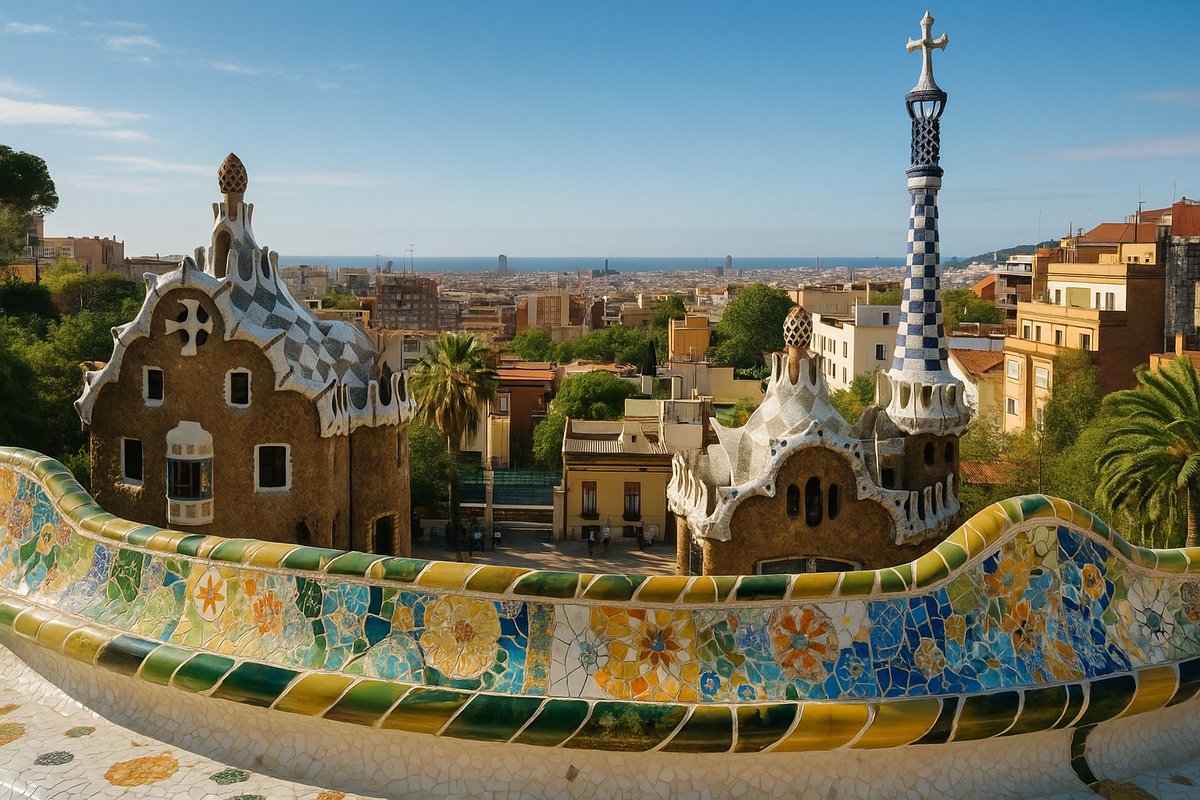
Park Güell, a UNESCO-listed municipal park in Barcelona, stands as a testament to the transformative power of architectural vision and urban planning. Originally conceived by the legendary Catalan architect Antoni Gaudí as a private housing estate, the project failed commercially but has since become one of the city's most beloved public parks. As the centenary of Gaudí's death approaches, Park Güell offers vital lessons for today's AECM professionals navigating the complexities of urban development and heritage conservation.
What Happened
Park Güell, designed by Antoni Gaudí, opened in 1926 not as the exclusive residential enclave it was intended to be, but as a municipal garden. The original plan, spearheaded by Gaudí and his patron Eusebi Güell, envisioned a 60-house development for Barcelona's elite on the city's outskirts. However, due to a lack of interest and financial viability, only two houses were completed and sold. The project was ultimately abandoned as a private estate and transformed into a public park. Today, Park Güell is a major tourist attraction, so popular that it has incited protests from residents concerned about over-tourism.
What This Means for Your Business
For AECM professionals, Park Güell serves as a case study in adaptive reuse and the potential for public-private partnerships to reshape urban landscapes. The site's transformation from a failed commercial venture to a thriving public space underscores the importance of flexible project planning and the ability to pivot strategically. For firms involved in government contracting or urban development, this highlights the potential value in projects that may initially seem unsuccessful. Furthermore, as cities worldwide grapple with issues of over-tourism and preservation, Park Güell's dual identity as a public park and cultural landmark exemplifies the balance needed between accessibility and conservation.
What US Operators Should Watch
As the centenary of Gaudí's death in 2026 approaches, there will be increased global interest in his works, potentially leading to new funding opportunities and collaborative projects focused on heritage and conservation. US operators should monitor developments in international preservation standards and funding mechanisms that could impact similar projects domestically. Additionally, the challenges of managing tourist influx in heritage sites like Park Güell offer valuable insights for US cities facing similar issues. Understanding these dynamics will be crucial for firms seeking to innovate in urban planning and heritage management.
Source: Dezeen. Read the original story ->
Is your firm ready for what’s next?
VisioneerIT helps AECM and government contractors modernize operations, achieve compliance, and implement AI.
Explore VisioneerIT Solutions →