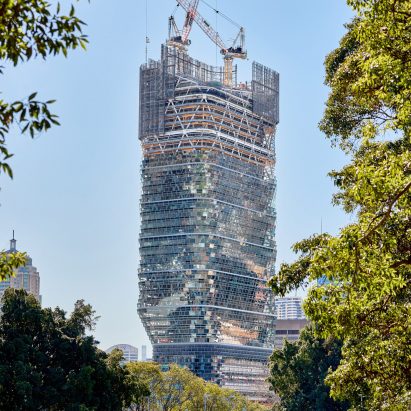
Ribbed glass facades now grace the skyline of Shanghai's Putuo district with the opening of the Jia Art Gallery, designed by the renowned British architectural firm Foster + Partners. The gallery's design, inspired by the petals of flowers in nearby Changfeng Park, marks a significant addition to the city's cultural landscape and serves as the main social hub for the Changfeng development.
What Happened
Foster + Partners' innovative approach to the Jia Art Gallery is characterized by its curvilinear form, which mirrors the geometry of a blossoming flower. As articulated by John Blythe, a senior partner at Foster + Partners, the building's inherent symmetry is intended to bring a sense of calm and balance to the fast-paced environment of Shanghai. The gallery features a distinctive stepped silhouette wrapped in tubular glass, creating a visually striking facade that draws natural light into the space. The building is divided by a double-height atrium, with the northern end housing the main galleries and the southern end dedicated to exhibition, event, and educational spaces.
Why It Matters for the AECM Industry
The Jia Art Gallery's design exemplifies the growing trend of integrating natural elements into urban architecture, a practice that is gaining traction for its aesthetic and environmental benefits. For architects and engineers, the use of ribbed glass and the building’s petal-inspired form present new opportunities to explore innovative design techniques that harmonize with the surrounding environment. The project also highlights the importance of creating multifunctional spaces that cater to community needs, offering insights into how future developments can incorporate cultural and social elements to enhance urban living. Additionally, the gallery's construction underscores the potential of using advanced materials and construction methods to achieve both visual appeal and functional efficiency.
What's Next
As the Jia Art Gallery opens its doors to the public, professionals in the AECM industry should observe how the building is received by both the local community and visitors. Insights gained from its design and functionality could inform future projects, particularly those aiming to blend cultural significance with modern architectural practices. Architects and developers will need to watch for feedback on the gallery's impact on community engagement and its role as a social hub, which may influence the planning of similar project
Is your firm ready for what’s next?
VisioneerIT helps AECM and government contractors modernize operations, achieve compliance, and implement AI.
Explore VisioneerIT Solutions →