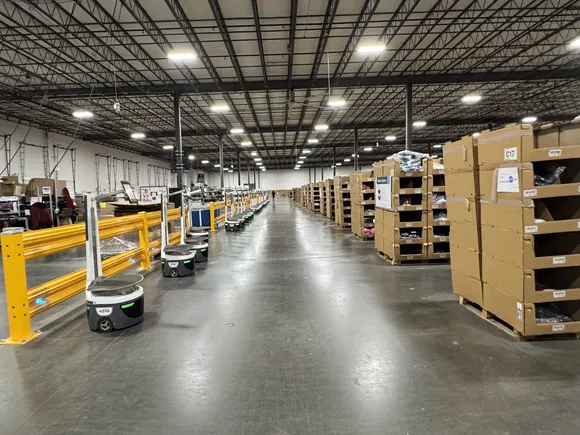
For Love & Lemons, a contemporary women’s fashion brand, has strategically overhauled its fulfillment operations by partnering with Cart.com to utilize their facility in Terrell, Texas. This move, initiated in July 2026, is aimed at reducing storage costs and accelerating delivery times, especially for East Coast customers.
What Happened
For Love & Lemons previously operated out of a dedicated fulfillment center in California, which limited its growth due to the site’s capacity being tied to its own volume. The brand's sales strategy, which heavily relies on direct-to-consumer (DTC) channels—accounting for 60% to 70% of its sales—demanded more flexibility and efficiency. The transition to Cart.com's shared infrastructure model not only lowers costs related to storage, shipping, and handling but also provides a scalable solution to accommodate changes in channel mix and order volumes. This strategic shift has already proven beneficial, as demonstrated by the successful launch of a collaboration collection with "A Court of Thorns and Roses" book series, where 75% of the collection sold out within 48 hours, with 1,200 orders shipped in just 24 hours without requiring additional staffing.
What This Means for Your Business
For businesses in the AECM sector, this case study highlights the critical importance of flexible and scalable logistics solutions. By leveraging shared infrastructure models like Cart.com's, companies can significantly reduce operational costs while enhancing their ability to meet fluctuating demand. This is particularly crucial for businesses that depend on direct-to-consumer sales and need to maintain stringent compliance with fulfillment and routing standards. Additionally, the ability to quickly adapt to market changes and consumer demand can offer a competitive advantage, potentially increasing return on investment and improving customer satisfaction.
What US Operators Should Watch
As the fulfillment landscape evolves, US operators should keep an eye on emerging logistics partnerships and shared infrastructure opportunities that can offer cost efficiencies and operational flexibility. Monitoring federal and state regulations related to logistics and fulfillment can also be crucial to ensure compliance and avoid potential penalties. Companies should also be prepared for potential shifts in consumer demand patterns and be ready to adjust their logistical strategies accordingly.
Is your firm ready for what’s next?
VisioneerIT helps AECM and government contractors modernize operations, achieve compliance, and implement AI.
Explore VisioneerIT Solutions →