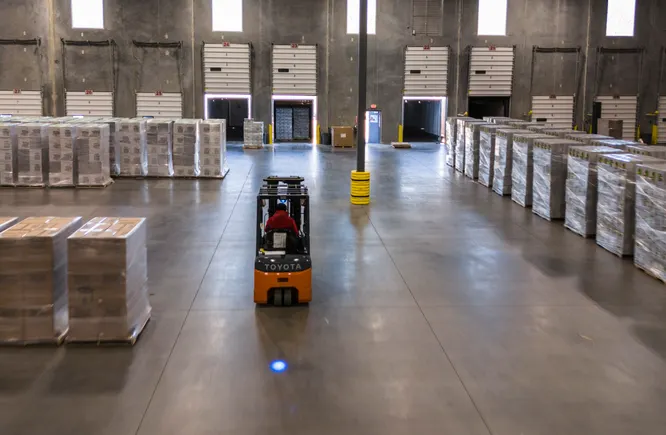
In today's rapidly shifting market landscape, businesses are finding that static warehouse models are no longer sufficient. Flexible warehousing is gaining traction as companies seek to align their distribution strategies with fluctuating demand and supply chain dynamics.
What Happened
Traditional warehouse planning has long relied on fixed facilities and long-term capacity commitments, but the unpredictable nature of modern markets demands a more adaptable approach. Flexible warehousing enables companies to adjust capacity, location, and services as needed, responding swiftly to changes in inventory and demand. This model can include a variety of services such as cross-docking, transloading, and order fulfillment, transforming warehouses into dynamic operational points within the supply chain rather than mere storage locations.
The case of KICKER, an Oklahoma-based manufacturer of high-performance audio equipment, illustrates the benefits of this approach. By partnering with Averitt, KICKER diversified its port usage and optimized its warehousing strategy in Charleston, significantly reducing downstream less-than-truckload (LTL) miles by up to 75%. This strategic shift not only cut transportation costs but also improved delivery times, demonstrating the critical role of warehouse location in overall supply chain efficiency.
What This Means for Your Business
For businesses within the AECM sector and government contracting, adopting a flexible warehousing strategy can enhance competitive positioning by reducing operational costs and improving service delivery. This approach allows firms to leverage third-party logistics (3PL) solutions to manage inventory more effectively and respond to seasonal or unexpected demand shifts without incurring the high costs associated with fixed warehouse infrastructure.
Moreover, flexible warehousing aligns with federal requirements for supply chain resilience and efficiency, potentially opening doors to new contracts and procurement opportunities. As C-suite executives and procurement directors evaluate their logistics strategies, incorporating flexible warehousing can lead to significant ROI by optimizing both real estate and transportation expenses.
What US Operators Should Watch
Decision-makers should closely monitor advances in warehouse management technologies and evolving 3PL services that facilitate flexible warehousing solutions. Keeping an eye on federal funding opportunities aimed at enhancing supply chain resilience can also provide a financial impetus for adopting more flexible distribution networks. Furthermore, staying informed about shifts in import and export patterns can help businesses preemptively adjust their warehousing strategies to maintain efficiency and minimize costs.
As the industry continues to evolve, flexible warehousing offers a strategic advantage for those ready to adapt to the unpredictable nature of global supply chains.
Source: https://www.supplychaindive.com/spons/when-demand-wont-sit-still-building-a-more-flexible-warehouse-network/830243/. Read the original story ->
Is your firm ready for what’s next?
VisioneerIT helps AECM and government contractors modernize operations, achieve compliance, and implement AI.
Explore VisioneerIT Solutions →


