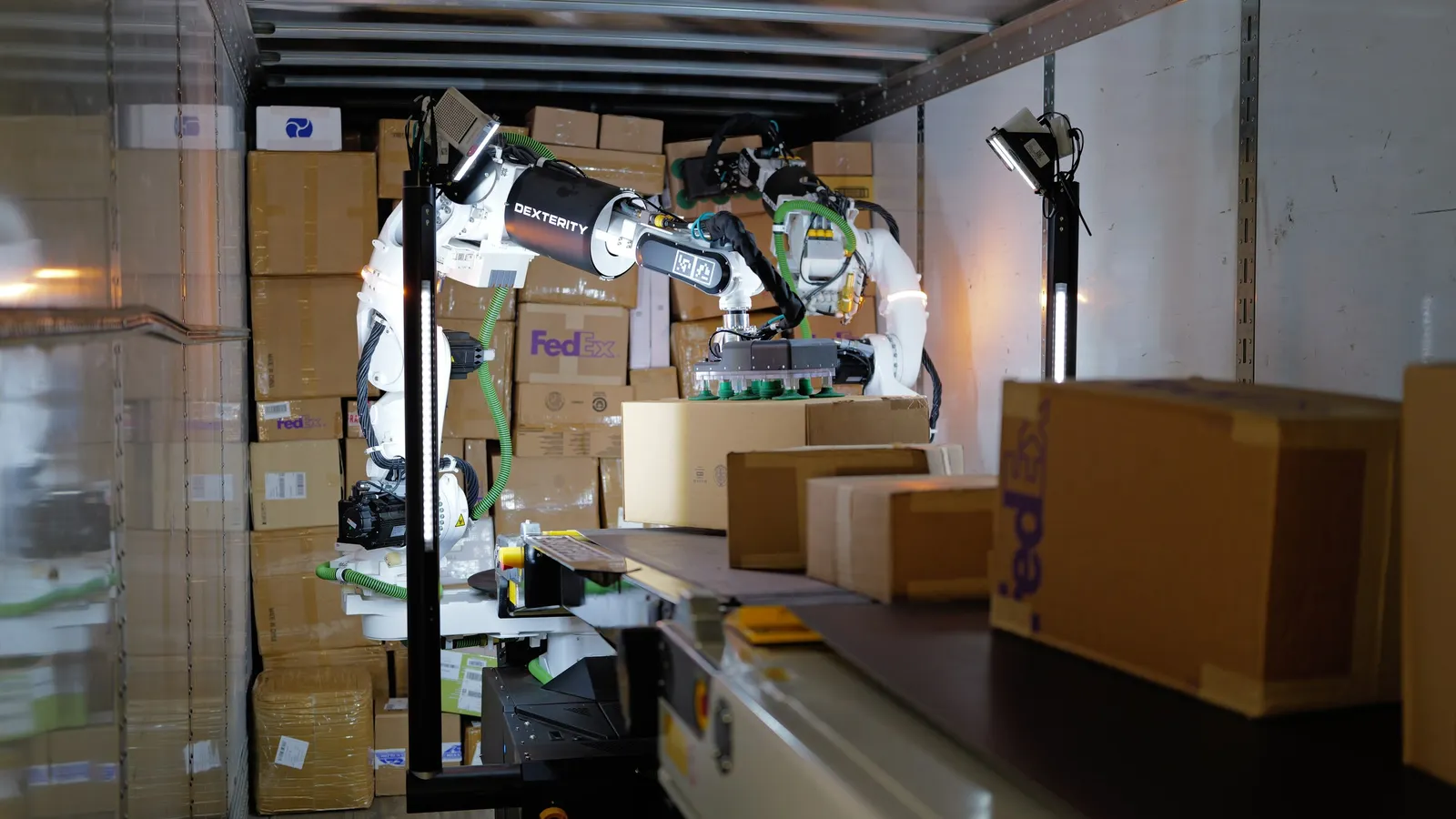
FedEx and Amazon are spearheading a significant shift towards automation in logistics by expanding their use of robotic arms. FedEx has recently implemented trailer loading systems at a Maryland hub, while Amazon plans to double its robotic arms fleet by the end of the year. This move signals a growing industry trend towards increased automation, reflecting a broader effort to enhance efficiency and reduce labor costs.
What Happened
FedEx and Amazon, two giants in the logistics and e-commerce sectors, are accelerating their investment in automation technologies, specifically focusing on robotic arms. FedEx has already deployed advanced trailer loading systems at its Maryland hub, a strategic move to streamline operations and manage increasing parcel volumes efficiently. Meanwhile, Amazon is on track to double its fleet of robotic arms by the end of this year, further cementing its commitment to automation. This expansion comes as part of a broader industry shift towards integrating more robotics and AI technologies to enhance operational capabilities and meet rising consumer demands.
What This Means for Your Business
For AECM professionals and government contractors, the implications of this shift towards automation are profound. As logistics companies like FedEx and Amazon adopt more robotic systems, there may be increased opportunities for contracts related to the design, engineering, and maintenance of these technologies. Additionally, businesses involved in manufacturing robotic components could see a surge in demand. Compliance with cybersecurity standards, such as CMMC and NIST, will become increasingly important as these robotic systems are integrated into broader operational frameworks. Moreover, firms that can offer innovative solutions to enhance robotic functionalities or improve integration with existing systems may gain a competitive edge.
What US Operators Should Watch
US operators should keep a close eye on federal funding opportunities that may arise in the realm of automation and robotics. Monitoring procurement windows for contracts related to the development and deployment of robotic systems could be crucial for staying competitive. Additionally, staying informed about upcoming regulatory requirements or changes in compliance standards related to cybersecurity and data protection will be vital as more robotic systems become interconnected.
Source: Supply Chain Dive. Read the original story ->
Partner Insight · VisioneerIT
The shift towards automation in logistics presents significant opportunities for businesses involved in design, engineering, and maintenance of robotic systems. As companies like FedEx and Amazon expand their use of robotics, leveraging software engineering and digital modernization can enhance operational efficiency and integration.
Explore VisioneerIT Cybersecurity →
Is your firm ready for what’s next?
VisioneerIT helps AECM and government contractors modernize operations, achieve compliance, and implement AI.
Explore VisioneerIT Solutions →