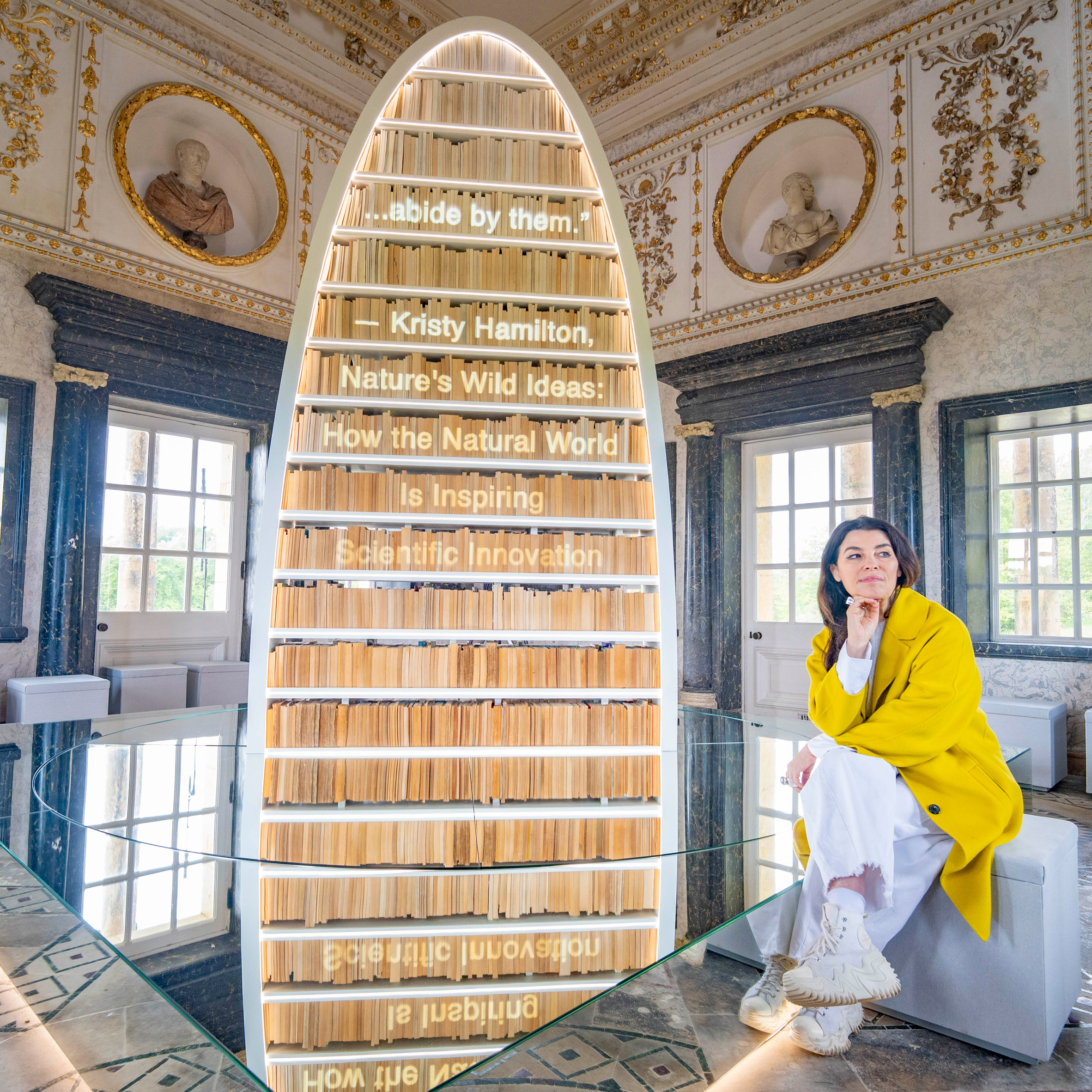
British designer Es Devlin has unveiled an innovative kinetic installation, the Library of the Four Winds, at the Temple of the Four Winds garden folly, located on the grounds of the historic Castle Howard in North Yorkshire. This revolving bookshelf installation redefines the intersection of art and architecture, offering a fresh perspective on integrating dynamic design elements into traditional settings.
What Happened
Es Devlin's Library of the Four Winds installation features a striking, illuminated revolving bookshelf at the heart of Castle Howard's Temple of the Four Winds. This 18th-century architectural gem now houses a modern twist with Devlin's design, which displays 250 books and rotates to engage visitors in a unique sensory experience. The installation not only pays homage to the traditional function of a library but also challenges the static nature of conventional architectural elements by introducing movement and light. The project underscores Devlin's reputation for creating large-scale sculptural installations that blend technology with the environment.
What This Means for Your Business
For architects, engineers, and construction professionals, Devlin's work exemplifies the potential of kinetic architecture to transform spaces. Incorporating dynamic elements can enhance user interaction and experience, which can differentiate projects in competitive markets. This approach can be particularly appealing in the restoration and adaptive reuse of historic sites, offering a way to modernize spaces while preserving their cultural significance. The application of such innovative designs can also open doors to new funding opportunities and broaden the scope of potential projects, especially in sectors where creativity and technology converge.
What US Operators Should Watch
US operators should closely monitor the growing trend of kinetic and interactive architectural elements. As the demand for innovative design solutions increases, federal and private sector projects may begin to incorporate similar installations, potentially influencing procurement standards and compliance requirements. Additionally, those involved in the restoration of historic sites could leverage kinetic design to secure grants or funding dedicated to preserving cultural heritage while introducing modern amenities.
Source: https://www.dezeen.com/2026/06/19/es-devlin-revolving-bookshelf-uk-country-house-pavilion/. Read the original story ->
Is your firm ready for what’s next?
VisioneerIT helps AECM and government contractors modernize operations, achieve compliance, and implement AI.
Explore VisioneerIT Solutions →