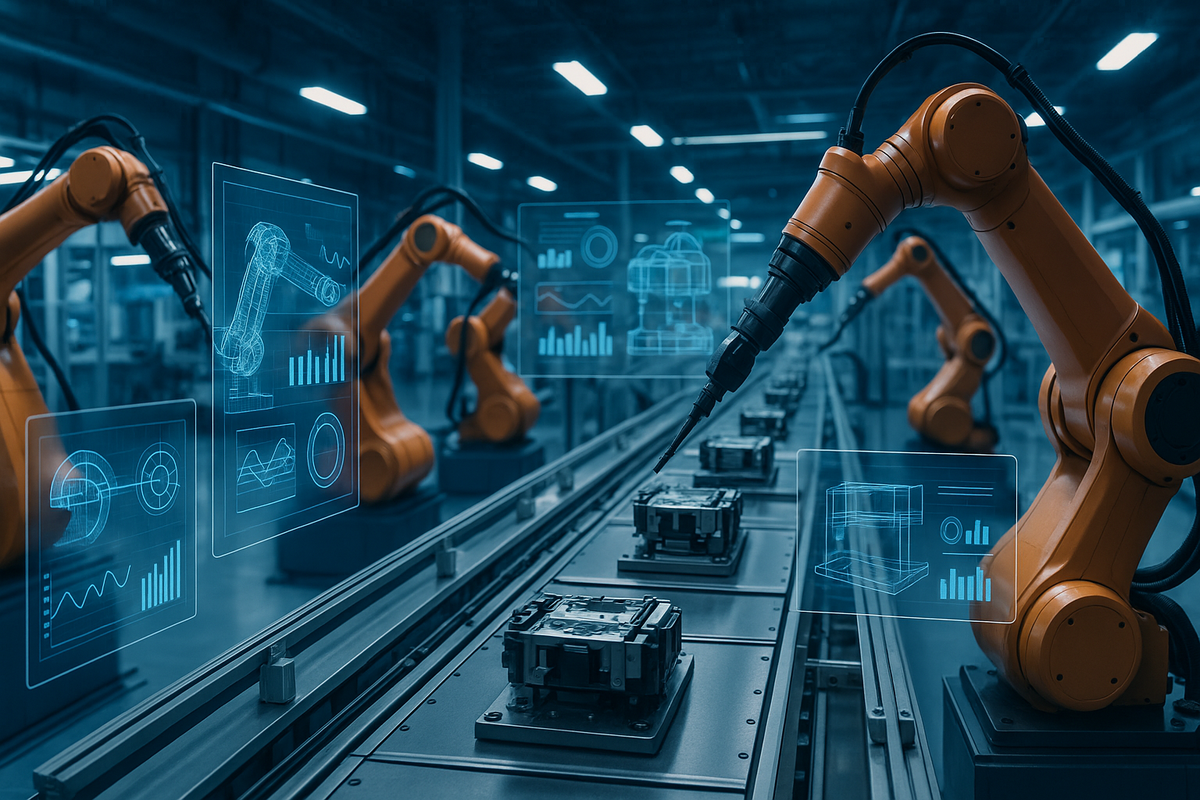
The global smart manufacturing market is set to explode, projected to reach $998.99 billion by 2032. This surge, driven by digital twins and intelligent automation, presents significant opportunities and challenges for the AECM sector.
What Happened
The advent of digital twins and intelligent automation is revolutionizing the manufacturing landscape. According to a report by Fortune Business Insights, the global market for smart manufacturing is expected to skyrocket, reaching nearly a trillion dollars by 2032. This transformation is fueled by the integration of digital twins—virtual replicas of physical entities—and intelligent automation technologies that enable manufacturers to optimize processes, enhance productivity, and reduce costs.
Digital twins provide real-time data and analytics, allowing manufacturers to simulate and predict outcomes, troubleshoot issues, and improve efficiency without the need for physical prototypes. Intelligent automation further enhances this capability by automating repetitive tasks and integrating advanced robotics and AI, leading to a more autonomous and smart manufacturing environment.
What This Means for Your Business
For businesses in the AECM sector, the rise of digital twins and smart manufacturing opens up new avenues for innovation and efficiency. The ability to simulate construction and manufacturing processes digitally can drastically reduce time-to-market and increase precision in project execution. Companies that embrace these technologies can expect to see significant improvements in ROI, as well as potential reductions in operational costs.
Furthermore, the integration of these technologies necessitates a keen focus on compliance, particularly with standards like CMMC (Cybersecurity Maturity Model Certification) and NIST (National Institute of Standards and Technology). Ensuring that digital systems are secure and compliant is critical to maintaining competitive advantage and avoiding costly penalties.
What US Operators Should Watch
As the smart manufacturing sector grows, US operators must stay vigilant about emerging technologies and standards. Key deadlines include the ongoing rollout of CMMC requirements and upcoming procurement opportunities that leverage digital twin technologies. Keeping an eye on federal funding initiatives that support smart manufacturing adoption can also provide a competitive edge.
Businesses should also monitor developments in AI and robotics integration, as these will likely dictate the pace of innovation and business transformation.
Partner Insight · VisioneerIT
The rise of digital twins and smart manufacturing highlights the need for robust software engineering and digital modernization. VisioneerIT offers expertise in full-stack development and workflow automation to help businesses scale effectively.
Explore VisioneerIT Cybersecurity →
Is your firm ready for what’s next?
VisioneerIT helps AECM and government contractors modernize operations, achieve compliance, and implement AI.
Explore VisioneerIT Solutions →