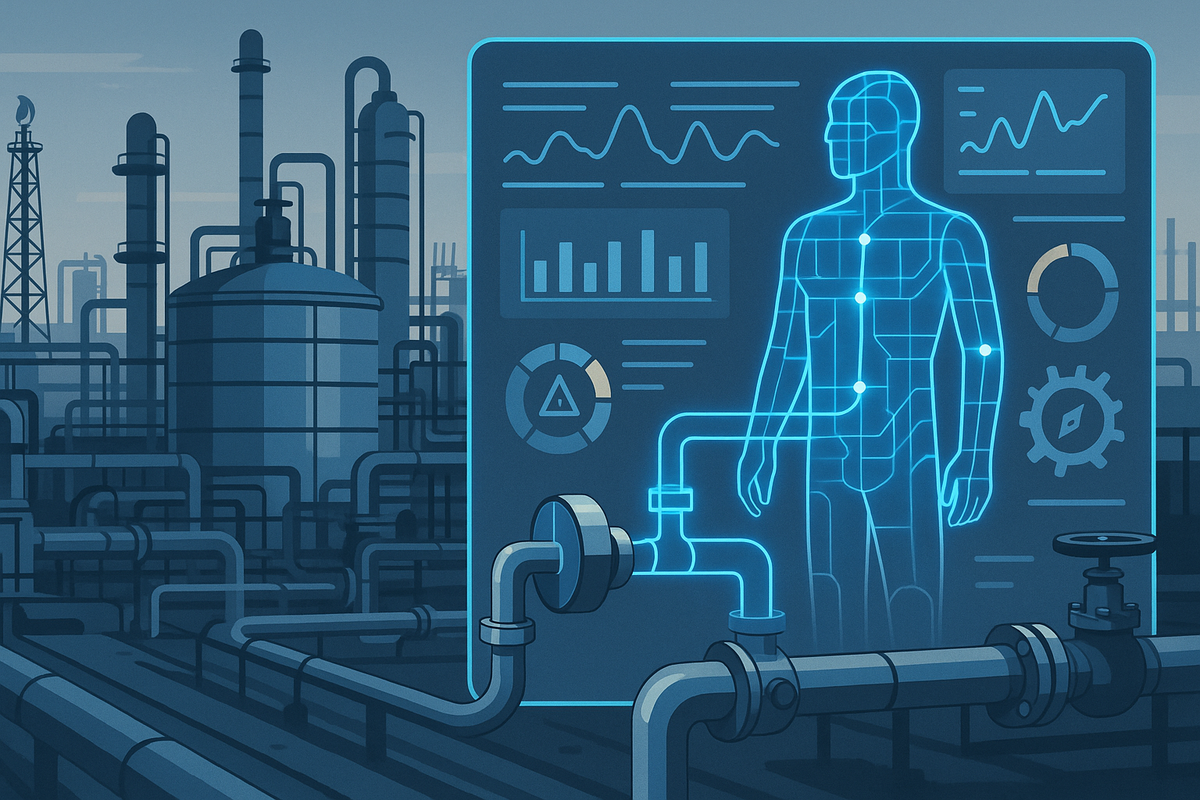
Digital twin technology is transforming the landscape of industrial automation, particularly in the oil and gas sector. This development is especially crucial now as it addresses safety and efficiency challenges in high-tech operations.
What Happened
The recent advancements in digital twin-enabled intelligent Human-Machine Interface (HMI) systems are making waves in the industrial automation sector. Researchers have developed an intelligent adaptive display using a unified artificial immune system (UAIS) integrated with neuro-endocrine interaction technologies. This system is designed for complex equipment diagnostics and control in the oil and gas industry. A significant feature is its predictive alarm system, which simulates technological processes to alleviate the cognitive load on operators. This system has been tested on Honeywell Experion PKS equipment at the Kazakh-British Technical University, demonstrating its potential to improve operator decision-making and maintain production homeostasis.
What This Means for Your Business
For companies in the AECM sector, embracing this technology could lead to significant improvements in operational efficiency and safety. The UAIS technology's compatibility with SCADA and DCS systems means it can be integrated into existing infrastructure, allowing for seamless upgrades. This is particularly relevant for those managing complex production environments, where reducing operator error and enhancing system reliability are paramount. The digital twin technology could also improve compliance with industry standards by providing real-time data and predictive insights, potentially reducing downtime and associated costs.
What US Operators Should Watch
US operators should monitor developments in digital twin technologies and consider partnerships with tech providers that offer UAIS capabilities. Additionally, staying informed about advancements in SCADA and DCS systems could provide a competitive edge. As the technology matures, there may be opportunities for federal funding or incentives aimed at promoting digital transformation in critical industries like oil and gas. Keeping an eye on regulatory changes and compliance deadlines will also be crucial for leveraging these innovations effectively.
Source: https://www.nature.com/articles/s41598-026-53028-y. Read the original story ->
Is your firm ready for what’s next?
VisioneerIT helps AECM and government contractors modernize operations, achieve compliance, and implement AI.
Explore VisioneerIT Solutions →